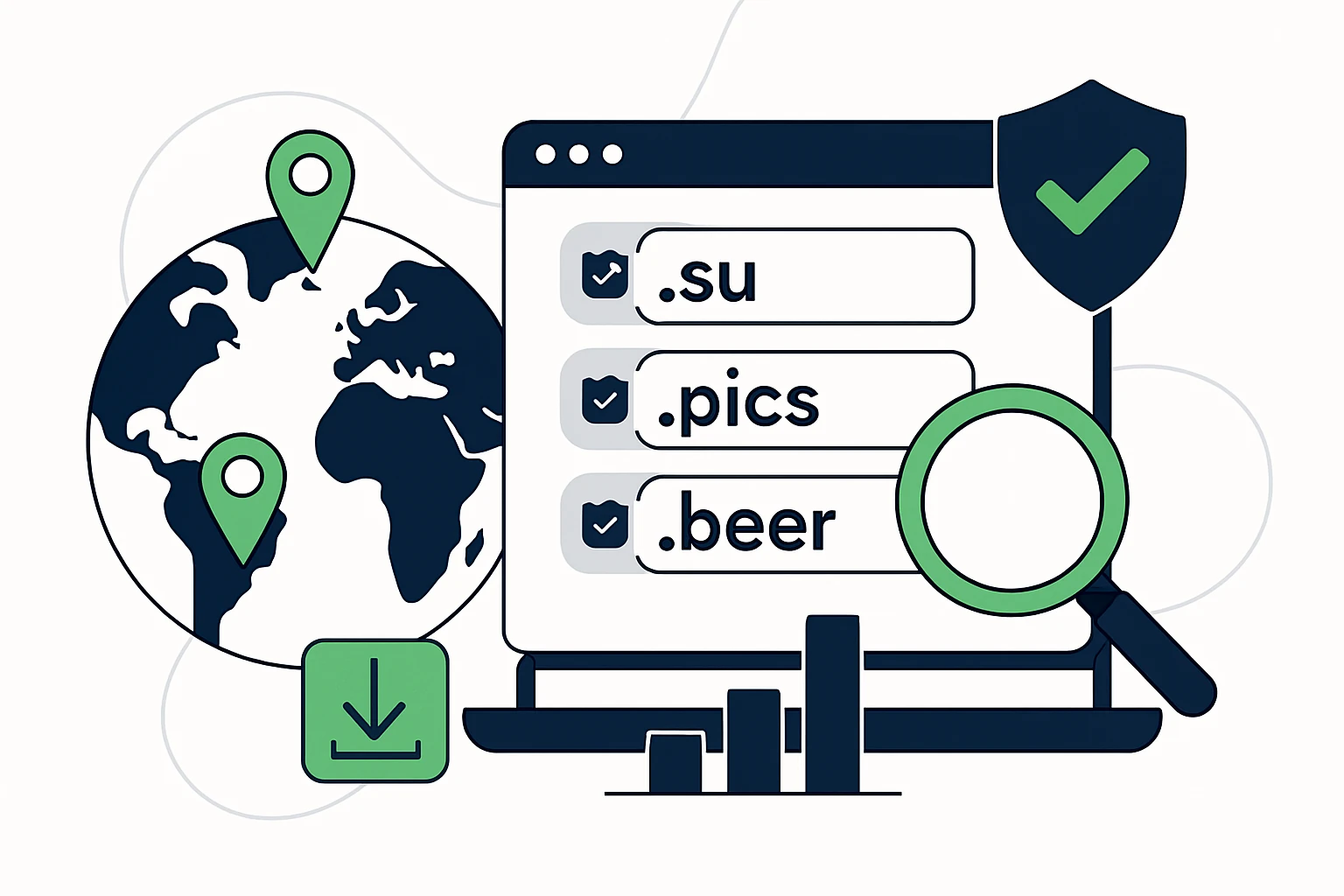
Introduction: why domain lists matter in digital risk intelligence
Brand abuse, phishing, and domain impersonation are not merely marketing or IT problems, they are surface-area threats that ride on real-world domain registrations. For security teams, threat hunters, and brand protectors, domain lists offer a concrete, monitorable signal set to detect look‑alike sites, typosquats, and unauthorized uses of a brand across diverse top‑level domains (TLDs). The question is not whether domain lists exist, but how to source them responsibly, how to validate their provenance, and how to translate the signals into timely actions. When used well, MA, FYI, and OVH domain lists can be one important pillar of a broader digital risk protection program that includes phishing detection, brand monitoring, and fraud intelligence. This article explains a practical approach to sourcing and using these lists, with attention to realism, ethics, and operational trade‑offs.
Why domain lists are foundational to digital risk intelligence
Domain lists - ready-made compilations of registered domains under specific TLDs - enable proactive risk detection in four key ways:
- Identifying look‑alikes and typosquats. Attackers frequently register domains that are visually or lexically similar to a brand to misdirect customers or harvest credentials. A focused list of domains in TLDs such as MA (Morocco), FYI, or OVH can help security teams spot suspicious registrations that merit further investigation.
- Monitoring high‑risk TLDs for brand exposure. Some brands use niche or regional TLDs for legitimate reasons. A monitored feed of domains in MA, FYI, and OVH helps distinguish benign registrations from malicious activity and reduces noise in alerts.
- Informing phishing protection workflows. Domain lists feed phishing detectors with real candidates to test against, enabling faster takedown decisions and better user warnings when a brand is impersonated online.
- Complementing brand protection programs. Domain intelligence is one layer in a multi‑vector defense that includes look‑alike site takedowns, fraudulent ads, and look‑alike social accounts. Combined with incident response, it supports a holistic risk posture.
To operate responsibly, teams should source lists from reputable channels and respect licensing, privacy, and usage boundaries. In the domain‑risk space, access to zone files and domain lists is regulated through industry standards and registry policies, which brings us to how to obtain them in a legitimate, scalable way. Centrally managed access via the ICANN CZDS is the primary mechanism by which researchers and security teams obtain bulk zone data from participating gTLDs, a foundation for many domain lists. (newgtlds.icann.org)
Where to source domain lists and how to access them legally
There are several paths to domain lists, each with its own advantages and constraints. The ICANN Centralized Zone Data Service (CZDS) is a cornerstone for researchers needing bulk access to gTLD zone files. CZDS provides a centralized portal to request and download zone data from participating registries, simplifying what would otherwise be a patchwork of individual registry arrangements. Access typically requires a legitimate academic, research, or security‑focused use case and, in some cases, a formal approval process with the registry. This approach underpins many legitimate security programs and threat‑intelligence workflows. (newgtlds.icann.org)
Beyond raw zone files, security teams often rely on vetted vendors and data platforms that curate domain lists, apply quality checks, and offer refresh cadences suitable for operational use. It’s essential to confirm data provenance, licensing terms, and update frequency before integrating any list into detection pipelines. A common misunderstanding is assuming that a single source provides a complete view of the namespace, in practice, zone files are snapshots, and registries may impose access controls or licensing requirements that affect how you deploy the data. The broader concept of a zone file, a textual inventory of active domains for a registry, helps frame expectations about coverage and updates. (en.wikipedia.org)
Practical use: how MA, FYI, and OVH domain lists support threat defense
Each TLD carries its own risk profile and legitimate use cases. When organizations monitor MA, FYI, and OVH domains, they gain visibility into a spectrum of risk signals that could otherwise slip through standard security controls. Consider the following practical angles:
- MA domains (Morocco): a regional TLD with regional business significance. A dedicated MA domain list helps uncover local impersonation campaigns, regional look‑alike sites, and gray‑market brand registrations that could mislead customers or partners in North Africa and the broader MENA region.
- .fyi domains (For Your Information): a generic TLD often used for information hubs, portfolios, or niche projects. A monitored FYI list can reveal domains registered to surface brand claims, misinformation, or informal product pages that mimic official sites.
- .ovh domains (brand TLD): OVH is a well‑known cloud and hosting provider. A curated OVH domain list can help distinguish between legitimate OVH‑hosted assets and potential typos, impersonations, or abuse of the OVH namespace for phishing or fraud efforts.
In practice, teams use these lists within phishing protection workflows, brand monitoring dashboards, and threat intelligence feeds. The workflow typically involves ingesting domain lists, normalizing the data, and correlating them with other signals (brand mentions, DNS configurations, hosting patterns, and look‑alike scoring) to triage alerts. For organizations that distribute risk intelligence internally, MA/FYI/OVH lists can broaden the scope of surveillance without overwhelming the system with irrelevant data.
A practical framework for using domain lists in threat intelligence
A four‑step framework to turn domain lists into action
- Define scope and signals. Decide which TLDs matter for your brand, geography, and markets. Establish the signals you care about (look‑alikes, typos, phishing hosts) and how they map to your security workflows.
- Verify provenance and licensing. Confirm that the domain list source aligns with your usage rights. CZDS access is designed for legitimate security researchers, while commercial data platforms may impose licensing terms and update cadences.
- Normalize and enrich. Normalize domain formats (lowercase, punycode handling, wildcard implications) and enrich with contextual data (hosting, RDAP/WHOIS data, SSL status) to improve match quality.
- Act and iterate. Integrate signals into detection and response playbooks, tune look‑alike scores, and refine the list over time based on false positives, threat trends, and business changes.
Limitations, trade‑offs, and common mistakes
Domain lists are powerful, but they have real constraints that teams must acknowledge to avoid overconfidence or misallocation of effort. The most common issues include:
- Incomplete coverage. Zone files reflect active domains in a registry at a given moment. Not every domain in circulation is captured every day, and some TLDs or registries restrict access or require separate processes. This means you should treat any single list as a snapshot rather than a complete map of the namespace. (en.wikipedia.org)
- Update cadence and volume. Domain registrations are dynamic. Relying on a weekly or monthly dump can miss fast‑moving campaigns. Align the data cadence with your alerting thresholds and incident response SLAs.
- Licensing and use rights. Some lists are provided under licenses that limit redistribution, commercial use, or integration into certain tooling. Always confirm terms before operationalization to avoid compliance risks.
- Noise vs. signal. The more TLDs you monitor, the more false positives you may encounter. A targeted scope, coupled with risk scoring and enrichment, helps maintain signal quality.
- Dependence on external sources. Domain lists complement but do not replace other signals (RDAP/WER, brand mentions, social accounts, hosting patterns). A multi‑vector approach yields a more robust defense.
Putting it all together: a practical workflow for brand protection teams
For brands with a global footprint, a disciplined workflow helps convert domain lists into tangible risk reductions. A suggested end‑to‑end flow looks like this:
- Scope planning. Define which TLDs to monitor (e.g., MA, FYI, OVH) and which business units or brands to protect. Establish a triage rubric for suspected impersonations.
- Source selection. Choose credible sources for domain lists, and if using zone files, ensure CZDS or approved vendors are in place. WebAtla's MA domain datasets or WebAtla TLD lists can serve as practical examples of how these lists surface domain data in context.
- Data engineering. Normalize, deduplicate, and enrich with RDAP/WHOIS data, hosting information, and historical trends. Build look‑alike scores that combine textual similarity, branding signals, and hosting patterns.
- Operational response. Route high‑confidence matches to takedown workflows, customer warnings, or brand‑protective actions, while logging decisions for auditability and improvement.
- Feedback loop. Measure false positives/negatives, update your scope, and adjust the risk framework to reflect evolving threat landscapes and product changes.
External resources and practical notes for security teams
While domain lists are a meaningful input, they work best when paired with a broader risk‑protection program. Industry guidance on access to zone data and the role of CZDS helps frame best practices for responsible data use. In particular, ICANN’s CZDS program outlines how researchers and security teams request access to global zone files and what considerations registries may require for data sharing. This framework supports a responsible approach to digital risk intelligence. (newgtlds.icann.org)
For readers who want a quick primer on the concept of zone files and their role in DNS data, a concise overview is available in educational sources that discuss what zone files contain and how they’re used in practice. This background helps teams set realistic expectations about coverage, timeliness, and completeness. (en.wikipedia.org)
Conclusion: domain lists as a disciplined tool in the risk‑protection toolkit
Domain lists for TLDs like MA, FYI, and OVH are not a silver bullet, but they are a valuable, practical input for digital risk intelligence. Used correctly, they help security teams detect impersonation attempts, monitor brand exposure across diverse namespaces, and accelerate phishing protection and incident response workflows. The key is to treat domain lists as one component of a broader strategy - one that blends look‑alike detection with brand monitoring, fraud insights, and proactive risk management. When you pair high‑quality lists with a rigorous data‑governance approach and an integrated threat‑intelligence workflow, you gain clearer visibility, earlier alerts, and more effective takedown actions for your brand across the global internet.
For organizations seeking to operationalize these signals in a production security program, consider integrating domain datasets as part of a layered defense that includes robust phishing protection services, brand monitoring dashboards, and incident response playbooks. WebAtla’s MA domain data and WebAtla’s TLD domain lists offer concrete examples of how these signals can be surfaced and used in real‑world risk management.