Introduction: why digital risk intelligence matters for brands in a crowded domain space
Today’s brands contend with a volatile digital ecosystem where impersonation, typosquatting, and fraudulent use of a brand’s identity can unfold in real time across dozens of top‑level domains (TLDs). Phishing pages, fraudulent registrations, and counterfeit sites are not anomalies but persistent attack surfaces. A proactive approach - digital risk intelligence - helps security, brand, and incident teams detect, assess, and blunt these threats before they inflict damage. Rather than waiting for a user report or a takedown request, organizations can build a layered view of risk that spans registration data, DNS activity, and public threat signals.
In practice, successful brand protection blends domain intelligence with broader threat intelligence. As one industry white paper notes, threat intelligence that combines domain data with behavioral signals enables defenders to identify evolving threats more quickly and allocate resources where they matter most. This is not a one‑and‑done exercise, it’s an ongoing capability that scales as an organization expands into new geographies and TLDs. (Expert insight summarized from DomainTools’ threat‑intelligence value proposition.) (domaintools.com)
What digital risk intelligence is - and why it’s central to brand protection
Digital risk intelligence (DRI) is the systematic collection, analysis, and dissemination of data about online threats to an organization’s digital assets. It goes beyond a single data feed and instead combines signals from open sources, registration data, DNS activity, and known attacker infrastructure to deliver context, risk scores, and actionable alerts. The value is twofold: it helps fit together an organization’s external risk profile (what could be abused) with its internal exposure (where the brand appears and how it’s perceived online). When executed well, DRI informs decision‑making across phishing protection services, brand monitoring tools, and incident response playbooks.
For brands, the practical upshot is a more precise early warning system. A credible threat‑intelligence framework can surface patterns such as rapid domain registrations with impersonation potential, clusters of similar looking domains, or DNS anomalies that precede a brand‑targeted campaign. This approach aligns with the broader cyber threat intelligence (CTI) discipline, which emphasizes structured collection, analysis, and dissemination of threat data to bolster proactive defenses. (domaintools.com)
Domain intelligence as a core lever for phishing protection and brand monitoring
Phishing and brand impersonation commonly hinge on domain infrastructure - new registrations, typosquatting, and compromised or abused domains that carry a brand’s identity without authorization. Domain intelligence tools help security teams watch the external surface, identify suspicious patterns, and prioritize takedowns or enforcement actions. For many organizations, the workflow begins with monitoring domain registrations and DNS configurations for terms or patterns that resemble their brand, then bridges to remediation workflows when risk is confirmed.
As the internet ecosystem evolves, the availability and structure of domain data change too. Industry observers note that the shift from WHOIS to RDAP is underway, affecting how organizations access registration data and integrate it into risk workflows. The move toward RDAP is designed to improve data quality, internationalization, and security compared with traditional WHOIS. (icann.org)
Practical workflow: how to download and operationalize domain lists by TLD
Organizations aiming to bolster brand protection and phishing defense can adopt a pragmatic, repeatable workflow around downloading and integrating domain lists by TLD. The three deliverables below reflect a defensible approach to collecting domain signals while maintaining governance and data quality.
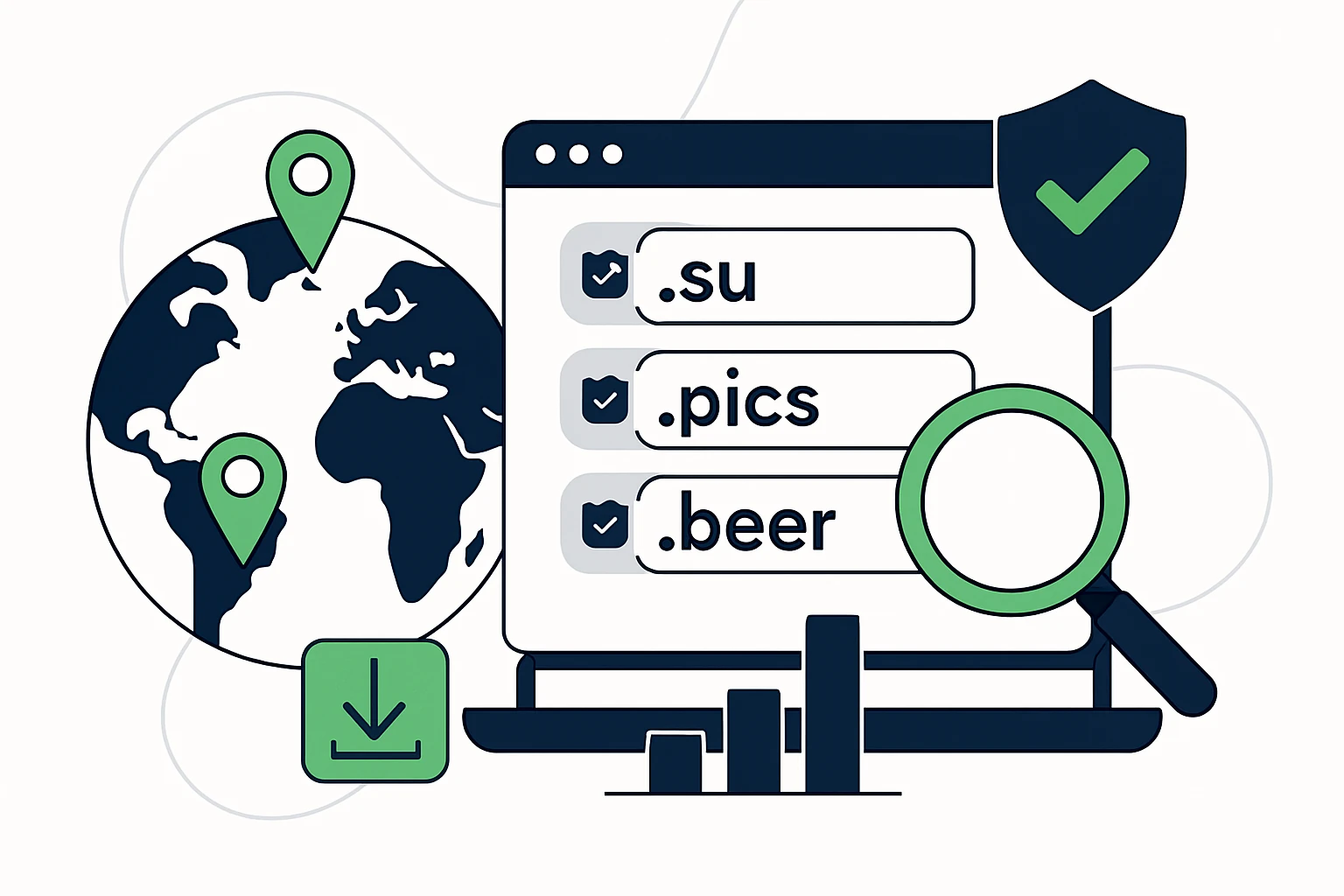
- Define target TLDs and use cases. Start with a prioritized set of TLDs where brand abuse is most likely to occur or where your digital footprint operates. This includes widely used generic TLDs (gTLDs) and country code TLDs (ccTLDs) relevant to your markets. For example, data people often explore lists associated with rests, HK domains, or HR domains to understand where impersonation risk might arise in specific regions or sectors.
- Download domain lists and validate data quality. Gather lists for the TLDs you’ve prioritized (e.g., .rest, .hk, .hr) and apply basic hygiene: deduplicate, normalize domain cases, and check for obvious typos and wildcard variants. Note that access and update cadence differ by TLD registries and policy frameworks, so expect a mix of public feeds, registry portals, and paid data sources. Modern risk platforms commonly enrich these lists with registration details and DNS context to improve signal fidelity.
- Enrich and operationalize signals. Use RDAP data as a structured source of registration details, complemented by DNS analytics (name servers, MX/CNAME patterns) and open threat signals. This enrichment enables more accurate risk scoring and reduces false positives when directing enforcement or mitigation actions. The industry trend toward RDAP - including the planned sunsetting of WHOIS for many gTLDs - shapes how teams architect data pipelines and automation. (icann.org)
Case in point: a practical integration of this workflow might involve pulling a live subset of domain data from a registry page that lists TLD domains (for instance, a page dedicated to .rest domains) and pairing it with your brand’s detection rules. In parallel, maintain access to a general domain intelligence platform that can harmonize these lists with ongoing threat signals and an incident response playbook.
Structured block: a compact framework for domain‑centric risk workflows
- Discovery - identify high‑risk TLDs and potential impersonation vectors relevant to your brand.
- Data consolidation - download domain lists by TLD (e.g., .rest, .hk, .hr) and enrich with RDAP/WHOIS data and DNS features.
- Risk scoring - apply a lightweight scoring model that weighs impersonation cues (similarity to brand, registered registrant region, DNS patterns) and assign priorities for investigation or takedown.
- Action and learning - route high‑risk domains to enforcement workflows and feed outcomes back into model improvements for future alerts.
Limitations, trade‑offs, and common mistakes to avoid
While domain lists and RDAP integration are powerful, several caveats deserve attention. First, not all registries expose uniform RDAP data across all TLDs, and some ccTLDs may still rely primarily on other data access methods. The industry is transitioning toward RDAP as the authoritative data source, but registry implementations vary by region and policy. Organizations should expect gaps or delays in data coverage across different TLDs. (ietf.org)
Second, raw domain lists are not a silver bullet. Without careful normalization, verification, and context enrichment, teams risk chasing false positives (e.g., legitimate registrations or typo variants that do not pose a real threat). A disciplined risk scoring framework and human review remain essential components of a resilient process.
Third, data volume can overwhelm teams if not paired with automation and workflow integration. The most effective setups connect domain‑level signals with a threat intelligence platform, alerting dashboards, and incident response playbooks so analysts can triage efficiently. Some providers emphasize the importance of AI‑assisted prioritization to help security teams focus on truly actionable signals.
Finally, data access costs and licensing constraints matter. While open feeds exist, high‑fidelity data often comes with licensing or subscription terms. A pragmatic approach combines free or low‑cost sources with a scalable enrichment layer so the program remains sustainable as you expand into new TLDs and regions.
How WebAtla fits into the domain intelligence workflow
WebAtla’s platform profiles domain intelligence in the context of digital risk and brand protection. It can help teams compile and harmonize domain lists by TLD, enrich them with registration and DNS data, and integrate the results with an organization’s incident response workflow. The platform’s capabilities align with the operational reality of modern phishing protection and brand monitoring, enabling security teams to move from reactive detection to proactive risk management. For organizations exploring TLD‑based signals, the following pages provide relevant context and data resources from WebAtla: WebAtla's .rest TLD domain list, List of domains by TLDs, RDAP & WHOIS database.
Beyond data access, the platform offers a pipeline to operationalize these insights into concrete protections, from domain takedown coordination to alert‑driven brand monitoring. The combination of domain intelligence with broader phishing protection services and fraud detection capabilities helps organizations maintain a robust external security posture as they grow. For reference, RDAP adoption and WHOIS sunset are shaping how registries expose registration data going forward, underscoring the importance of API‑driven, machine‑readable data formats. (icann.org)
Takeaways for practitioners
- Start with a clear scope: identify the most relevant TLDs and the types of brand‑abuse signals you care about (impersonation, typosquatting, or counterfeit sites).
- Leverage RDAP as the primary data source for domain registrations moving forward, while acknowledging registry variability in data availability. (icann.org)
- Combine domain lists with DNS context and threat signals to produce more accurate risk scores and actionable alerts.
- Integrate the workflow into an incident response plan so high‑risk findings translate into timely takedowns or enforcement actions.
Conclusion: building a resilient brand defense through domain intelligence
Digital risk intelligence, anchored by domain insights, offers a disciplined approach to protecting brands in a dynamic online landscape. By defining a purposefully scoped set of TLDs, downloading and enriching domain lists, and integrating these signals into an automated workflow, organizations gain a proactive edge against phishing and brand impersonation. As registry data evolves toward RDAP and as protection platforms mature, the ability to translate external signals into informed actions will separate mature brand protection programs from reactive defenses.
For teams seeking to operationalize these concepts, WebAtla provides a practical toolkit to access TLD domain data and combine it with RDAP/WHOIS insights, supporting the broader goal of digital risk intelligence and brand protection at scale.