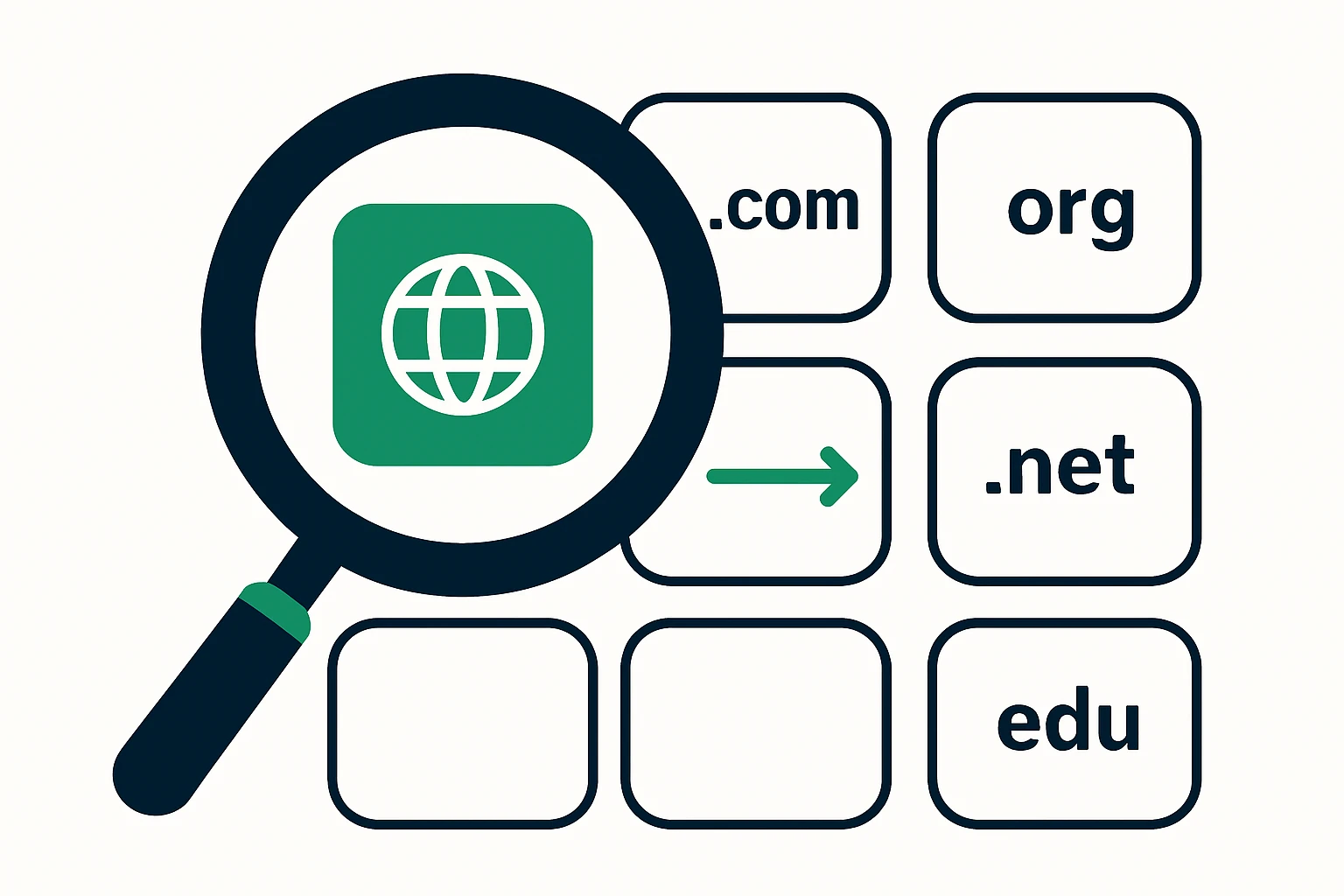

Introduction: the new frontier in brand protection
Brands today face impersonation and phishing not just within familiar domains like .com or .org, but across a rapidly expanding universe of domain extensions. Since the ICANN New gTLD Program began expanding the namespace in the early 2010s, hundreds of new generic top-level domains (gTLDs) have joined the DNS root. While this growth creates opportunities for legitimate brands to reach new audiences, it also widens the attack surface for fraudsters who register lookalike or typosquatted domains. To defend customers and reputations, organizations need more than a snapshot, they need a robust, up-to-date domain TLD list that spans all extensions. The IANA Root Zone Database remains the authoritative source for current delegations and changes across the DNS root. IANA Root Zone Database keeps track of which TLDs are active, which are in development, and how they relate to policy and registry operators.
This article argues for a structured approach to domain extension monitoring, grounded in the real-world dynamics of phishing and brand risk, and demonstrates how a comprehensive GTLD list supports digital risk intelligence and proactive brand defense. For practitioners, the goal is not to chase novelty but to build a repeatable framework that stays current as the GTLD landscape evolves. ICANN and the broader DNS ecosystem continually update guidance as new rounds of gTLD applications and policy discussions unfold, making ongoing monitoring essential.
The GTLD landscape today: what it means for risk and protection
To understand risk, it helps to distinguish between generic top-level domains (gTLDs) and country-code TLDs (ccTLDs). The DNS root lists both, with gTLDs like .com, .org, and hundreds of newer extensions, and ccTLDs such as .uk or .de. The general trend since 2012 has been a steady increase in delegated gTLDs, a shift that has implications for brand protection and phishing risk. The root-zone data and ICANN’s public history explain how these changes unfold and how registries are governed in subsequent rounds of expansion. IANA Root Zone Database and ICANN New gTLD Program provide the canonical framing for this evolution.
Estimates cited in industry and reference sources suggest the global pool of delegated gTLDs has grown into the hundreds, approaching the low thousands when you count active registrations and subdomains. While directories and lists vary by source, the practical takeaway is clear: brands operating on one or more TLDs should assume coverage across a broad set of extensions, not just the familiar few. For context on the scope of the namespace, see the public-facing overviews of gTLD expansion and the root-zone catalog.
Why a complete domain extensions list matters for digital risk intelligence
A comprehensive GTLD list is not a luxury, it is a foundational input for digital risk intelligence and brand protection workflows. Phishing campaigns and brand impersonation increasingly leverage a wide array of TLDs to evade detection and confuse customers. The Anti-Phishing Working Group (APWG) tracks these trends and has documented record-level phishing activity across recent years, including the high volumes reported in 2023 and ongoing activity into 2024 and 2025. Relying on a narrow list of extensions leaves an organization vulnerable to misdirection and rapid domain lifecycle changes. APWG’s quarterly findings illustrate how attackers adapt to new TLDs and other vectors, reinforcing the case for broad, ongoing monitoring. APWG Q4 2023 Year in Review and APWG Trends Report Q4 2024 provide concrete context for these dynamics.
From a risk-management perspective, a complete domain extension list enables several critical capabilities: (1) asset discovery and inventory across all extensions, (2) domain-name risk scoring that considers TLD-specific abuse patterns, and (3) streamlined collaboration between brand protection teams and incident responders when questionable domains appear in unfamiliar TLDs. The broader DNS ecosystem’s evolution - documented in ICANN’s ongoing communications and the IANA registry - means that the most effective defense is a living map of domain extensions rather than a static checklist.
A practical framework for domain extension monitoring
Below is a pragmatic framework that teams can operationalize to align a GTLD list with a risk-driven brand protection program. It draws on industry best practices and the realities of a rapidly evolving namespace.
- Asset inventory and taxonomy: Create a comprehensive inventory of owned domains, brand handles, and associated trademarks, then map them to relevant TLDs. Include IDN variants and potential typosquats in multiple extensions. This lays the groundwork for scalable monitoring.
- TLD risk scoring: Assign risk weights to TLDs based on abuse history, registration patterns, and proximity to your brand’s core markets. APWG’s reports show that malicious activity shifts across vectors and extensions, a dynamic scoring model helps allocate resources where they matter most.
- Monitoring cadence and coverage: Establish a cadence for monitoring both legacy and newer gTLDs, with automated alerts for newly registered domains that resemble your brand. The IANA and ICANN ecosystems emphasize ongoing governance and registry activity, which should drive monitoring frequency.
- Threat intelligence integration: Tie domain findings to threat intel feeds (phishing campaigns, malware distributions, or credential harvesting) to prioritize investigation and response.
- Incident response alignment: Develop playbooks that specify triage steps, evidence collection, and dispute resolution processes across a broad set of TLDs.
Structured block: Domain Extension Risk Map (framework)
- Asset inventory and taxonomy
- TLD risk scoring
- Monitoring cadence
- Threat intel integration
- Incident response alignment
In practice, a trusted data source for this work is a dedicated domain intelligence feed that covers multiple TLDs. The client’s offering includes extensive TLD listings and a RDAP/WHOIS database, which can power both the asset inventory and the monitoring workflows. For direct access to these datasets, you can explore: WebAtla's TLD lists and RDAP &, WHOIS Database.
Limitations and common mistakes in GTLD risk management
Even with a robust GTLD list, teams face practical constraints that can erode protection if not managed deliberately.
- Relying on a static list: The GTLD landscape shifts as new rounds open and registries update policies. Regular refreshes from authoritative sources are essential. ICANN’s ongoing discussions and upcoming rounds are a reminder that change is the norm. ICANN New gTLD Program updates illustrate this ongoing evolution.
- Overlooking IDN variants: Internationalized Domain Names (IDNs) add complexity, attackers may register visually similar variants in non-Latin scripts, complicating monitoring. The broader ecosystem discussions around universal acceptance and IDNs highlight why a truly global view matters.
- Ignoring privacy and WHOIS data gaps: WHOIS privacy and rate-limited WHOIS privacy services can obscure registrant information, making quick attribution harder. Robust workflows combine multiple data sources (RDAP, WHOIS, registrar data) to corroborate findings.
- Underestimating the breadth of abuse vectors: Phishing, typosquatting, and brand impersonation increasingly operate across a mix of extensions. APWG’s ongoing reporting demonstrates the need to monitor beyond the most popular extensions and across a broad set of TLDs.
Bringing it together: the role of the GTLD list in brand protection and risk intelligence
In practice, a complete domain extension list informs a more resilient brand protection program. It enables asset discovery across all extensions, supports risk scoring that reflects real-world abuse patterns, and provides a concrete data backbone for incident response. As the DNS ecosystem continues to evolve - with new gTLD rounds anticipated in 2026 and beyond - organizations that institutionalize comprehensive TLD coverage will be better positioned to detect and disrupt threats before they impact customers or reputation. ICANN’s and IANA’s ongoing governance work and the APWG’s visibility into phishing trends provide a practical context for why this matters now. ICANN blog on gTLD program achievements and the APWG Trends Report Q4 2024 offer concrete evidence of the risk landscape you’re defending against.
Conclusion: turn risk into resilience with a living GTLD map
The GTLD landscape is not a static backdrop, it is an active, dynamic component of digital risk. A rigorous domain extension monitoring program - anchored by a current and comprehensive domain TLD list - lets security teams stay ahead of abuse, align brand protection with incident response, and continuously refine risk scores as new extensions emerge. For organizations seeking a practical, credible source of domain data, WebAtla’s TLD lists and RDAP/WIPO-backed database can serve as a reliable foundation within an integrated risk-intelligence workflow.