Across the global digital landscape, no brand can afford to overlook its own footprint beyond the home country. Domains registered in dozens of jurisdictions can be a source of revenue, a gateway for local customers, or a vector for risk if mismanaged. The challenge is not simply finding every domain with a brand name, but maintaining a living, accurate inventory that spans country code top-level domains (ccTLDs), new gTLDs, and regional variants. A robust domain inventory is the backbone of digital risk intelligence and brand protection, enabling phishing protection, fraud detection, and rapid incident response. This article explains why a country-domain list matters, how to construct one, and how to operationalize it within an enterprise risk program.
Why a country-domain list is essential for brand protection and risk intelligence
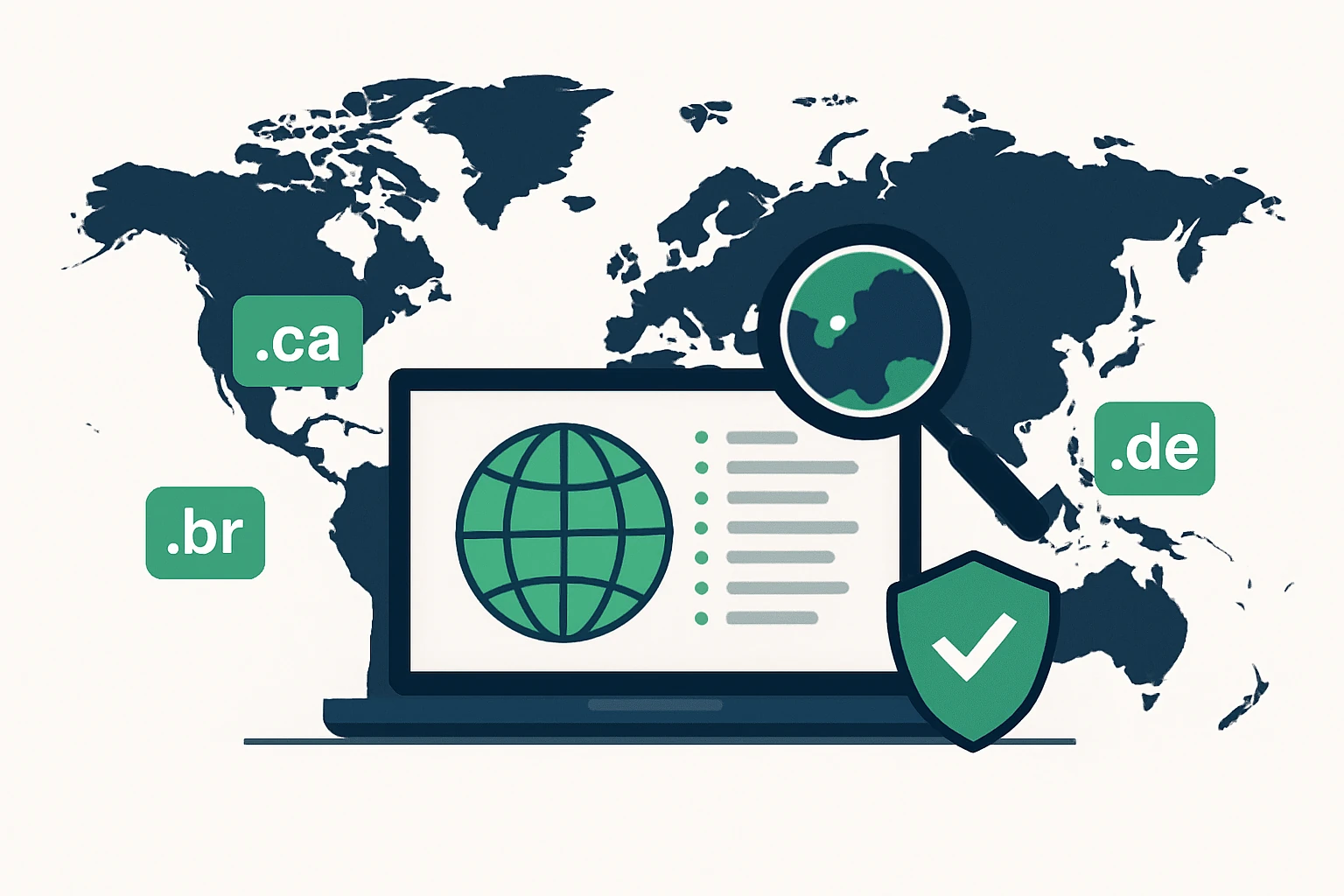
Brand protection today demands visibility into where a brand appears online, not just where it is registered in the home market. ccTLDs are managed by national registries under a global ecosystem coordinated by ICANN, and they host a substantial portion of the internet’s address space. A comprehensive inventory that includes ccTLDs helps organizations detect misuses, typosquatting opportunities, or impersonation campaigns in localized markets. ICANN has highlighted the role of ccTLDs in global domain governance and the importance of monitoring abuse data through systems like DAAR (Domain Abuse Activity Reporting) and MoSAPI for registries that participate. (icann.org) In practice, this means your risk posture improves when you can map brand-related domains by country, language, and regulatory environment.
From a legal and enforcement perspective, ccTLDs also come with their own dispute-resolution pathways and governance frameworks. The WIPO Center provides policy and dispute-resolution services for ccTLDs, helping registries and brand owners resolve conflicts in a standardized, internationally recognized manner. This alignment between policy and protection mechanisms is a critical component of a mature brand-protection program. (wipo.int)
Defining the scope: what to include in a global domain inventory
An effective inventory isn’t limited to a brand’s official domains. It includes variations of brand names, misspellings, localized equivalents, and relevant regional TLDs that could be exploited by copycats or fraudsters. A pragmatic scope typically covers:
- All ccTLDs that host any domain bearing the brand name or common misspellings
- Major gTLDs used in key markets (for example .com, .net, .org) and language-specific alternatives
- Subdomains and potential typosquats under relevant ccTLDs
- Explicit brand ownership signals: registrar, registrant, and renewal status where permissible
Maintaining this scope requires governance around data accuracy and timely updates, since domain registrations can change daily. Enterprise-grade approaches use automated lookups (RDAP and WHOIS) combined with registry-provided data to keep the inventory current. RDAP, in particular, is increasingly adopted as the successor to WHOIS for registration data delivery, with several registries offering modern APIs to improve data consistency and access. (icann.org)
How to build a country-domain inventory: a practical, repeatable framework
Below is a structured, repeatable framework that teams can adopt to compile and maintain a robust country-domain list. It balances depth with practicality and aligns with the needs of digital risk intelligence and brand protection programs.
- Discover
- Inventory native ccTLDs by ISO code and by market relevance using authoritative sources (ICANN data, registries).
- Aggregate known brand domains, synonyms, translations, and common misspellings across geographies.
- Leverage RDAP and WHOIS data (via a trusted database) to confirm ownership, creation date, and status.
- Normalize
- Standardize naming conventions (brand prefixes, suffixes, and regional language variations) into a canonical form.
- Tag domains by market and risk tier (high, medium, low) to prioritize monitoring efforts.
- Map & Enrich
- Associate each domain with its country registry, language, and regulatory context.
- Enrich with risk signals: expiration window, current registrar, DNSSEC status, and known phishing indicators.
- Monitor
- Set up automated alerts for new registrations that match variations of the brand name in target jurisdictions.
- Regularly audit the inventory against registry feeds and DAAR data (when available) to detect anomalies.
- Act & Govern
- Prioritize remediation actions (take-downs, disputes, or credible registrations) based on risk tier.
- Maintain a governance cadence: quarterly reviews, policy updates, and stakeholder sign-off for changes in scope.
In practice, enterprises commonly integrate this framework with a centralized risk dashboard and incident-response playbooks. For organization-wide reliability, it’s valuable to tie the inventory to data sources that are updated in near real time, such as registry feeds or a dedicated RDAP/WHOIS database. The modern approach also benefits from a portfolio-management mindset - treating the brand’s domain footprint as a portfolio that requires ongoing risk assessment and optimization. As one leading domain-protection provider notes, governance and discovery must be complemented by security-enhanced portfolio management to stay ahead of threats. (markmonitor.com)
Structured block: a practical inventory blueprint you can use today
Use the following compact blueprint to ground your own program. It is designed to be operational without heavy tooling, while remaining scalable as your domain footprint grows.
- Discovery phase - Compile core brand-name domains, regional variants, and credible misspellings across ccTLDs and major gTLDs.
- Verification phase - Validate ownership and status with RDAP/WHOIS data, record renewal dates and registrar information.
- Risk tagging - Label each entry by market importance and exposure (high/medium/low) to guide monitoring intensity.
- Monitoring cadence - Establish automated alerts for new registrations, DNS changes, and suspicious activity in high-risk zones.
- Remediation playbook - Define when to pursue takedowns, disputes, or strategic acquisitions to close gaps.
This framework, while compact, helps teams move from ad-hoc searches to a disciplined, auditable process. It also aligns with industry observations that a well-governed, technology-assisted portfolio is central to effective domain protection. For example, portfolio-security practices are evolving to integrate AI-driven insights and data-rich workflows, enabling teams to detect broader patterns of risk across global domain assets. (markmonitor.com)
Limitations, trade-offs, and common mistakes
Even with a solid framework, several practical limitations must be acknowledged and managed:
- Data accuracy and timeliness: RDAP and WHOIS records are only as current as the registrars provide them, and some registries still lag in real-time data delivery. This is a known challenge in centralized risk programs that rely on external feeds. ICANN’s DAAR initiative and MoSAPI data sharing are steps toward greater transparency, but variance remains among registries. (icann.org)
- Registry policy and privacy: Different ccTLDs have distinct registration requirements and privacy rules, which can affect visibility and enforcement options. Dispute resolution, where available, should be aligned with local policies and international protocols (e.g., WIPO’s ccTLD program). (wipo.int)
- Resource intensity: Building and maintaining a global inventory is resource-intensive. Prioritization by market importance and exposure is essential to keep the program sustainable over time. Even leading protective services emphasize the need for governance and structured portfolios to avoid a creeping, unmanageable scope. (markmonitor.com)
Common mistakes to watch for include treating the inventory as a one-time project, overrelying on a single data source, or neglecting regional regulatory nuances that affect takedown efforts. A disciplined approach that combines discovery, verification, monitoring, and governance helps mitigate these risks and supports faster, more precise responses when threats arise.
Case in point: aligning a global inventory with incident response
Consider a multinational brand with a footprint that spans North America, Europe, and Asia. A country-domain list that captures ccTLDs associated with the brand enables localized phishing detection, such as unexpected brand variants appearing in a country-specific TLD, and supports rapid incident-response workflows. The inventory becomes a reference point for both proactive defense and reactive investigations. In practice, this means your security operations center (SOC) can correlate a suspicious domain’s country, registry, and registration status with observed phish campaigns and domain-age signals to prioritize takedown or dispute actions. This kind of integrated, data-rich approach is increasingly recognized as foundational to effective brand protection in a global environment.
For organizations seeking to operationalize this approach, tools that provide centralized domain intelligence and up-to-date registry data can be a meaningful accelerant. While not a single solution fits every organization, a layered strategy that combines a robust domain inventory with proactive monitoring and a clear governance model tends to deliver the strongest protection.
How WebAtla fits into a global domain inventory strategy
The WebAtla platform offers a structured data backbone to support a country-domain inventory and broader digital risk intelligence program. In particular, its RDAP and WHOIS database capability can provide reliable registration data to validate ownership, track changes, and surface risk indicators across a global footprint. For teams that also need to understand domain breadth by TLD and country, WebAtla’s domain lists by TLD and country can help you anchor the discovery phase and accelerate the normalization process. For teams exploring practical data sources, you can explore the WebAtla RDAP & WHOIS database here: WebAtla RDAP &, WHOIS database. You can also inspect domain footprints by TLD, including .com and other domains, at WebAtla: TLD com.
Integrating these capabilities with a formal inventory framework helps ensure your brand protection program stays current, defensible, and scalable as you expand into new markets. The combination of authoritative data and a governance-first approach aligns with industry best practices around domain portfolio management and risk mitigation.
Conclusion: turning a country-domain list into a strategic risk-management asset
A global domain inventory is more than a records shelf. It is a strategic asset that informs phishing protection, brand monitoring, and fraud detection across geographies. By starting with a clear scope that includes ccTLDs and major gTLDs, building a repeatable process for discovery and verification, and embedding this inventory into incident response and governance, organizations can reduce brand risk, improve response times, and create a defensible, auditable risk program. As the domain ecosystem evolves - with ongoing improvements in data access and dispute-resolution frameworks - the disciplined, data-driven approach described here provides a reliable path to resilient brand protection in a connected world.