Introduction
Brand risk in the digital age extends beyond a single data breach. Companies confront impersonation, typosquatting, and phishing across a sprawling web surface. Domain lists by TLD - such as .vn, .today, and .work - offer a pragmatic starting point to map this surface and seed ongoing monitoring. Used judiciously, these lists become the raw material for digital risk intelligence, not a substitute for human judgment.
Industry data in 2025 underscores why this matters. Verisign reported that by the second quarter of 2025 there were about 371.7 million domain registrations worldwide, underscoring the volume teams must watch. This scale makes targeted, TLD-specific lists especially valuable for narrowing the field to high-risk vectors. Verisign DNIB Q2 2025.
Why domain lists matter in digital risk intelligence
Domain lists by TLD act as a screening lens to identify typosquats or impersonation domains that could target customers or partners. They are particularly valuable when brands operate in multiple markets or want to deter opportunistic domain registrations that could be leveraged for fraud. Importantly, lists are seeds, not comprehensive coverage: many risk domains are created using privacy protections or low-cost registrars that obscure ownership signals.
Threat activity trends illustrate why this matters. The APWG Phishing Activity Trends Report tracks millions of phishing attacks and campaigns, highlighting the need to triangulate domain lists with real-time signals. In 2025, phishing activity remained a persistent threat as attackers evolved their infrastructure and techniques. APWG Trend Reports (Source: APWG Trend Reports).
From lists to action: a practical workflow
The path from static domain lists to actionable risk intelligence follows a disciplined workflow that combines high-quality data with live signals.
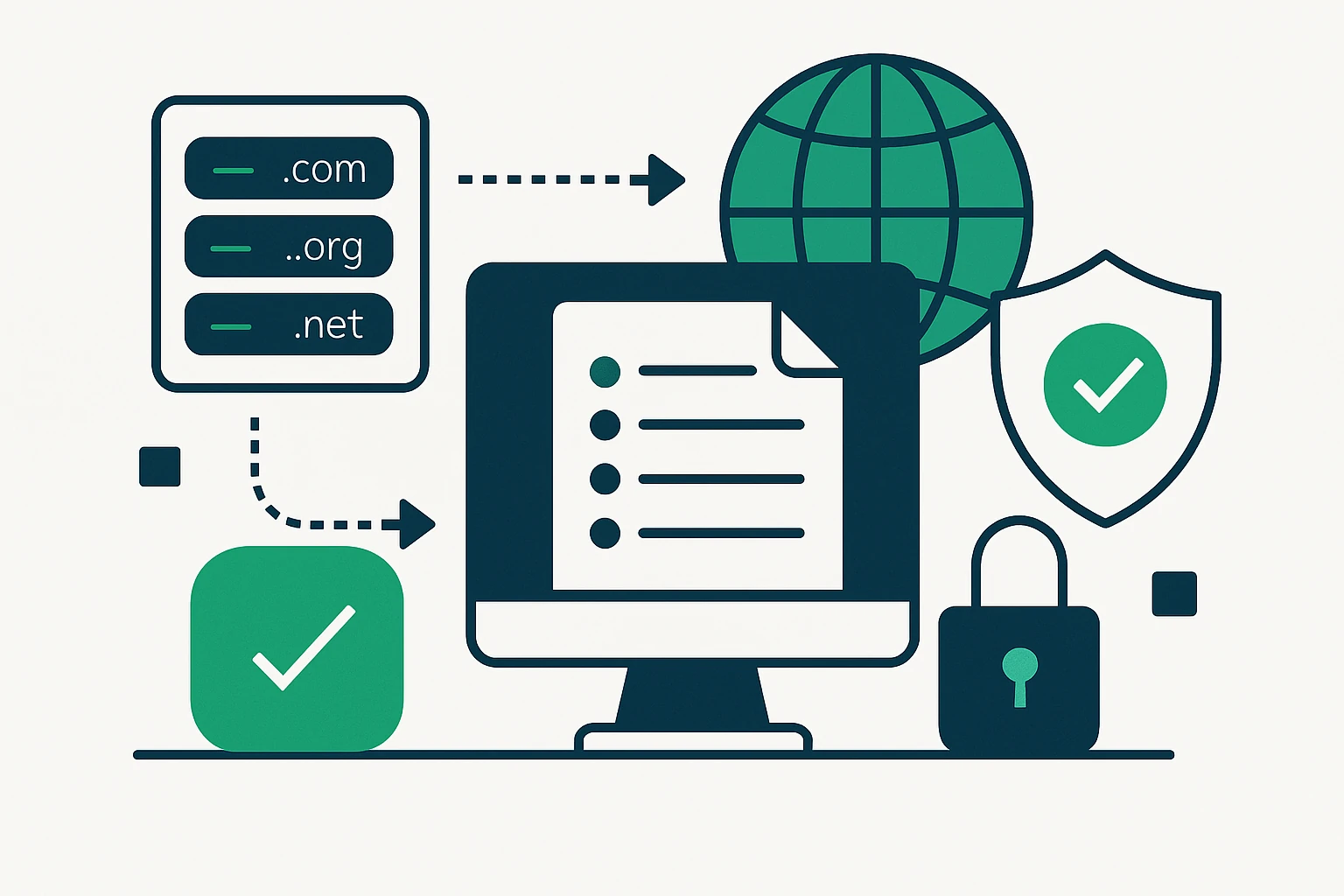
Framework: Discover • Validate • Respond
- Discover - ingest and deduplicate relevant TLD domain lists (for example, the VN domain list) and build a clean inventory. Incorporate tld domain lists into your monitoring base.
- Validate - enrich with RDAP and WHOIS data to confirm registration status and ownership signals. Use a trusted data source like the RDAP & WHOIS database to cross-check domains and identify geographies or registrars that merit closer attention. For a standard reference on RDAP, see the ICANN RDAP overview and the IETF RDAP specifications, such as RFC 7482.
- Respond - triage high-risk domains into your brand protection and phishing response workflows, then monitor for changes. See how this ties into broader signals like phishing detection methods and brand protection.
Use cases: applying .vn, .today, and .work domain lists for brand protection
In markets like Vietnam, the .vn namespace is actively used, and attackers sometimes register lookalike domains to mislead local customers. A disciplined approach to the VN domain list, combined with global threat signals, helps brands identify typosquats early and take preventive actions. Similarly, newer TLDs such as .today and industry-focused domains like .work can be exploited to host phishing pages or impersonate legitimate partners. The goal is to illuminate risk surfaces without overwhelming teams with noise.
Operationally, teams use domain lists as a baseline and then enrich with contextual signals such as domain age, registration in specific jurisdictions, and hosting patterns. The combination of a high-quality domain list with real-time threat intelligence reduces false positives and accelerates remediation. This is where WebAtla’s data resources come into play, for example by enabling access to the VN domain list and supporting RDAP-based verification.
Expert insight: Domain lists are starting points. The true value comes when you enrich them with behavioral signals and incident context, so your security operations center can distinguish credible threats from noise. Treat lists as “seed data” that must be continually validated and correlated with live abuse reports and threat feeds.
For practitioners seeking a broader view of domain data, the publisher hosts a directory of domains by TLDs and by technology that can be used to seed investigations. You can explore the VN list and other domain data resources here: the VN domain list, List of domains by TLDs, and for general domain data, RDAP & WHOIS database.
Limitations and common mistakes
- Limitation: Domain lists are seeds, not a complete map of risk. Many abuse domains use privacy services or fast flux techniques that obscure ownership or hosting signals, making enrichment essential.
- Mistake: Relying on a single TLD or a single data source. Criminals move across multiple TLDs and registrars, so multi-source correlation is critical.
- Operational pitfall: Treating lists as definitive without continuous validation or incident-context. Combine with real-time abuse reports, phishing feeds, and DNS/hosting indicators to reduce false positives.
- Data quality: Poorly maintained lists can introduce noise. Normalize, deduplicate, and remove invalid or duplicate domains before cross-referencing with risk signals.
- RDAP and ownership signals: RDAP data may be incomplete or delayed in some regions, understand the limitations of data sources and prioritize signals with corroborating context. See the RDAP overview and RFCs describing the RDAP standards.
Conclusion
Domain lists by TLD are a practical, scalable starting point for digital risk intelligence and brand protection. Used judiciously, they help security teams illuminate blind spots, seed proactive monitoring, and accelerate incident response when combined with RDAP/WL data and live threat signals. A mature approach treats lists as one component of a broader program that includes brand monitoring tools, phishing detection, and robust incident response planning. By marrying editorial rigor with data-driven signals, organizations can move from reactive firefighting to proactive risk containment.
To explore more domain data sources and tooling, consider the VN list and other WebAtla resources for structured domain intelligence: the VN domain list, List of domains by TLDs, RDAP & WHOIS database.