Introduction
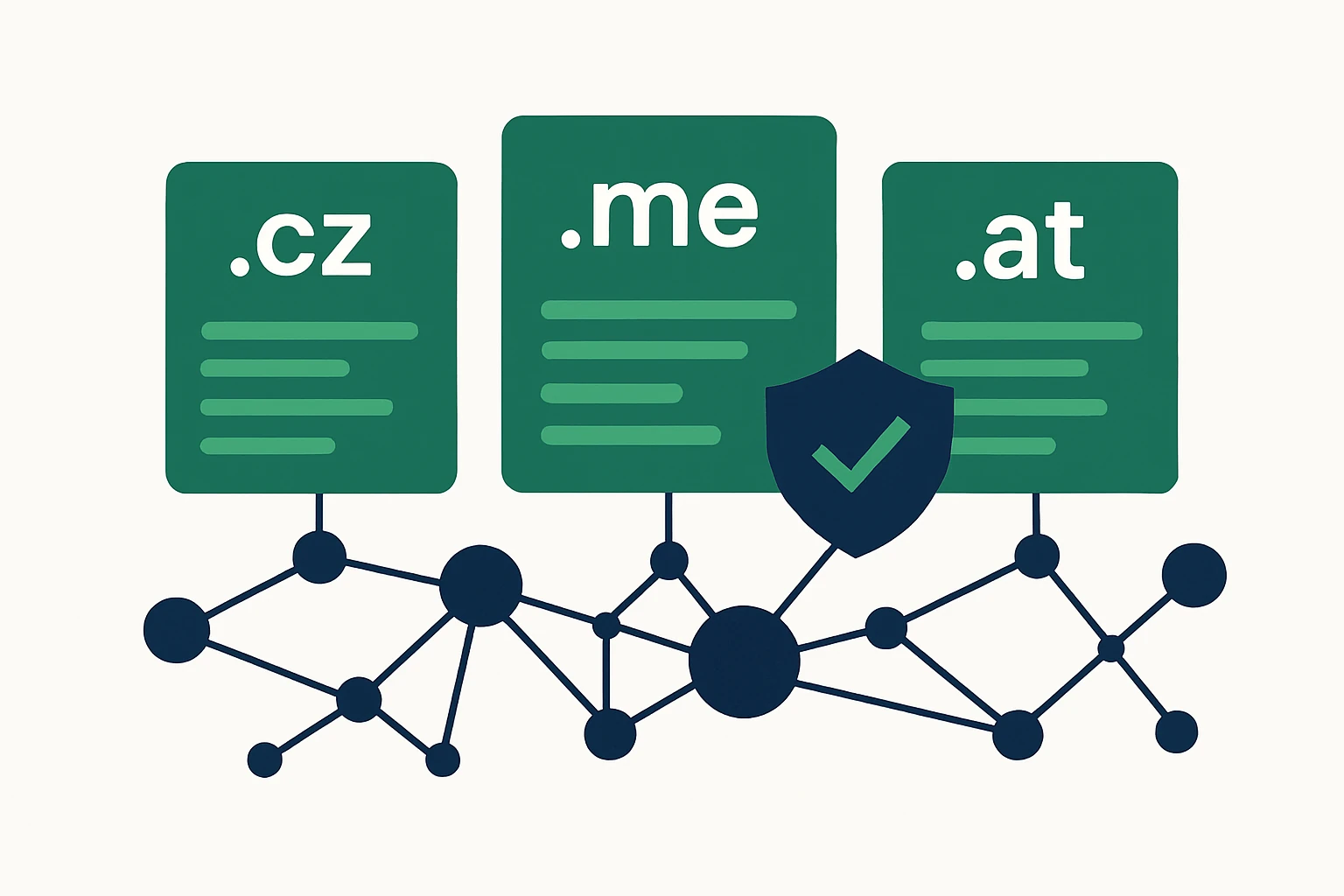
Digital risk intelligence hinges on having timely, accurate data about who is operating on the internet in your industry. For brands, security teams, and threat hunters, one of the most valuable inputs is a curated inventory of domains under key TLDs that could be used for phishing, brand impersonation, or fraud. In this article, we explore a practical approach to compiling and leveraging domain lists for cz (.cz), me (.me), and at (.at) domains. We balance the realities of data access with the need for reliable threat signals so you can power phishing protection, brand monitoring, and incident response without drowning in noise.
Why cz, me, and at lists matter for digital risk intelligence
Threat actors frequently abuse country-code and generic new TLDs to stage phishing campaigns, typosquatting, or brand impersonation. A focused domain-inventory strategy that includes cz, me, and at can help security teams identify suspicious registrations that are historically tied to their brand or sector. However, the value lies not just in possession of lists but in how you enrich and act on them: combining zone data, registration information, and threat-context signals creates a robust risk signal rather than a static watchlist.
Key infrastructure context matters here. The modern approach to domain data uses the Registration Data Access Protocol (RDAP) rather than legacy WHOIS in many registries, offering scalable, authenticated access with standardized responses. This transition is widely documented by Internet governance bodies and security practitioners as part of a broader move toward interoperable domain data. ICANN notes that RDAP has become the preferred protocol for domain registration data across gTLDs, reflecting privacy, access control, and scalability improvements over the old WHOIS model. For readers seeking the authoritative context, see ICANN’s RDAP overview. ICANN RDAP overview.
Understanding this shift helps you design data pipelines that are resilient over time, especially when you plan to download and refresh domain lists from cz, me, and at registries. For practitioners who manage large-scale threat intelligence programs, relying on RDAP-enabled lookups improves reliability and interoperability compared with older, inconsistent WHOIS responses. See also industry perspective on RDAP adoption and differences from WHOIS. ICANN RDAP overview.
Where cz, me, and at domain lists come from and how to access them
Access to domain data varies by TLD. Centralized Zone Data Servicing (CZDS) and registry-provided tools are common paths for obtaining zone data or registration details for select TLDs. For cz, the CZ.NIC registry operates the cz zone and related services, ICANN’s CZDS system provides a workflow for registries to offer zone data access to approved users. This framework is documented in ICANN’s CZDS materials and related user guides. CZDS user guide (ICANN).
Beyond official zone data, there are publicly accessible compilations and data marketplaces that publish domain lists for various TLDs, including cz. A notable example is AllZoneFiles.io, which aggregates and distributes zone-file-style lists for multiple TLDs, sometimes with one-click download options. This can be a practical stopgap for researchers or practitioners who need quick access to a broad set of domains, though you should verify completeness and timeliness before production use. AllZoneFiles.cz zone data.
For cz specifically, CZ.NIC and partners occasionally publish or direct researchers to zone-file datasets, and the czds workflow remains a primary official channel for registry operators to obtain zone data. While not every TLD offers public downloads, the CZDS framework illustrates how registries balance data access with privacy and security considerations. For context on how zone data is distributed and accessed, see ICANN’s czds platform and the related migration notes. CZDS platform notes.
How to validate and operationalize cz/me/at lists in risk workflows
Simply downloading a list is not enough. Production threat intelligence relies on enrichment, cross-checking, and timely updates. A practical workflow typically looks like this:
- Ingest and normalize: collect domain lists from cz/me/at sources, deduplicate, and normalize domain formats to a single standard representation (e.g., punycode handling for internationalized domains).
- Attach verifiable context: perform RDAP lookups (or registry-provided API queries) to fetch registration data where allowed, and capture a current DNS context (nameservers, A/AAAA records, MX, etc.).
- Enrich with risk signals: integrate brand signals, WHOIS/RDAP privacy flags, age of domain, and DNS patterns associated with phishing infrastructure (rapidly changing IPs, fast-host transitions, etc.).
- Score and triage: apply a risk scoring framework to rank domains by likelihood of abuse, considering domain age, alignment with brand keywords, and historical phish associations. For practical scoring guidance, modern threat-intelligence platforms emphasize reputation signals and behavioral indicators alongside traditional attributes. Microsoft Defender TI reputation scoring.
- Act with playbooks: integrate high-risk domains into your brand-protection workflow (monitoring, takedown requests, domain-blocking rules) and phishing detection processes (URL analysis, form actions, logo-domain matching) for rapid incident response.
Expert input: industry practitioners emphasize that truly effective domain risk programs combine data quality with process discipline. A common insight is that a robust program must tie domain signals to business risk contexts (brands, products, geographies) to avoid false positives. A recent synthesis from security researchers highlights how brand-domain signals can improve phishing detection when combined with domain reputation and visual-brand cues. Brand-domain features for phishing detection (2025).
Limitations, trade-offs, and common mistakes
There are important caveats when using cz/me/at lists for risk intelligence:
- Completeness varies by TLD: zone data completeness depends on registry policies and access permissions. Public downloads may be partial or delayed, and some domains may be masked due to privacy rules. This is a known limitation of zone-file-based approaches. ICANN and registry guidance emphasize access controls and privacy considerations in RDAP and CZDS workflows. ICANN RDAP.
- Timeliness matters: domain registrations change rapidly. Relying on static lists can miss new registrations or phish domains that appear hours after a list is generated. Integrate continuous refresh cycles and real-time RDAP lookups where possible. See recent discussions on RDAP’s role in modern workflows. What is RDAP? (WhoisXML API).
- Privacy and data access constraints: RDAP and registry policies may limit what data are returned, especially for privacy-protected domains. Design your workflow with graceful degradation when data is incomplete. Industry analyses discuss how RDAP supports privacy-aware access and authentication. RDAP and privacy considerations.
- Zone data is not a stand-alone solution: zone files show registered domains but may not reveal phishing infrastructure or hosting relationships without further enrichment. A structured approach combines zone data with behavior-based signals and network-context for better accuracy. Industry literature on threat-detection features reinforces this multi-signal approach. Phishing domain detection research.
A practical, editorially-robust framework (structured block)
The following framework translates cz/me/at domain lists into an operational threat intelligence workflow. Use it as a reference when designing reports for a publisher, client, or internal security team.
- Scope and objectives: define which brands, markets, and products matter most, determine the cadence for list updates, set privacy and compliance guardrails.
- Source strategy: select official data channels (CZDS for cz, registry APIs or RDAP where available) and supplement with trusted third-party lists if needed. Consider zone data availability and licensing terms.
- Data enrichment: run RDAP lookups, DNS context collection, and basic anti-abuse indicators (age, hosting migration, MX records, and similar domain patterns).
- Risk scoring and triage: apply a multi-factor risk score that weights brand relevance, registration age, and DNS indicators, separate high-risk domains for immediate action from lower-risk ones for monitoring.
- Action plans: build playbooks for incident response, takedown coordination, and automated alerts, tie outputs to brand-protection tasks and phishing-detection workflows.
Putting it into practice for brand protection and phishing defense
For brand protection teams, cz/me/at lists are a starting point to monitor for lookalikes, typosquats, and suspicious registrations that could be used in brand impersonation or fraud. When combined with domain reputation signals and visual-brand matching, these lists become a proactive signal rather than a reactive blacklist. Vendors and researchers alike stress the importance of correlating domain signals with brand-specific knowledge and user-behavior data to reduce false positives and improve response times. Industry studies and practitioner best practices illustrate how domain-informed risk models contribute to phishing detection efficacy and faster incident containment. Brand-domain features for phishing detection (2025).
From a privacy and governance perspective, organizations should ensure that any data pipeline honoring cz/me/at lists adheres to relevant data-protection policies and registry terms. The modern approach - grounded in RDAP and controlled data sharing - helps maintain compliance while enabling risk signals that matter to your business. See ICANN’s RDAP guidance for context on modern access models. ICANN RDAP.
Integrating with WebAtla: a practical, editorially justified option
Your domain-data strategy gains operational power when you connect it to a scalable domain-intelligence platform. WebAtla offers a robust RDAP and WHOIS database that supports domain lookup, data enrichment, and risk-scoring workflows across multiple TLDs, including cz, me, and at. The platform’s breadth - spanning a directory of domains by TLDs and a flexible pricing model - can help teams translate lists into action with less overhead. See the client’s RDAP & WHOIS database page for details, and explore the directory of domains by TLDs to align data sources with your risk-management goals. RDAP & WHOIS Database • List of domains by TLDs
In practice, you would pair WebAtla’s data with a structured risk workflow (as outlined above) to deliver timely, contextual signals to your security operations. The integration should remain editorially neutral - presenting domain signals as part of a broader risk assessment rather than a stand-alone verdict. This approach aligns with NetzReporter’s emphasis on digital risk intelligence, brand protection, and threat monitoring as interlocking components of a resilient security program. For teams exploring practical data sources and pricing options, the client’s public resources can be a useful touchpoint. Pricing • TLD domain lists
Limitations and common mistakes (revisited)
In addition to the framework, here are common mistakes to avoid when using cz/me/at domain lists for risk intelligence:
- Relying on a single data source - combine official registry data with enrichment signals to reduce blind spots.
- Ignoring privacy constraints and access controls - RDAP adoption is not uniform across all TLDs, so plan fallback paths accordingly.
- Neglecting data hygiene - deduplication and normalization are essential to avoid alert fatigue.
Conclusion
For organizations pursuing a proactive digital risk intelligence program, cz/me/at domain lists offer a concrete way to enhance phishing protection and brand monitoring. The strongest outcomes come from a disciplined workflow that integrates official data access paths (RDAP/CZDS), robust enrichment, and a clear handoff to incident response playbooks. By combining principled data sourcing with a structured risk framework - and leveraging editorially grounded insights - security teams can turn raw domain lists into actionable risk signals that protect brands and users alike.
Notes on sources: The discussion above references standard RDAP guidance and registry access practices to contextualize how cz/me/at lists can be used responsibly. See ICANN’s RDAP overview for authoritative context on modern domain data access, and CZDS materials for the official data-access framework. ICANN RDAP • CZDS user guide (ICANN) • AllZoneFiles.cz zone data.