Introduction: the invisible perimeter of your brand
In an era where brand risk often begins long before a customer encounters your official site, security and brand teams increasingly rely on bulk domain data to spot threats early. Domain registrations, typosquatting attempts, and impersonation campaigns cluster across thousands of TLDs, making a generic watchlist insufficient. For digital risk intelligence programs, access to credible, timely lists by TLD - such as .net, .org, and .uk - can accelerate detection, triage, and response. Yet raw lists without context quickly become noise. The challenge is to turn bulk data into actionable signals that protect customers and stakeholders, not drown them in false positives. The right approach blends data quality, licensing discipline, and domain context with a defensible workflow built for brand protection and phishing defense. NetzReporter audiences will benefit from a topic that bridges practical domain data acquisition with threat-aware processing.
Understanding bulk domain data: what it is and why it matters
Bulk domain data refers to pre-compiled registrant and DNS information for large swaths of the internet, often filtered by top-level domain (TLD). For security teams, these lists enable proactive monitoring for new registrations, changes in ownership, or registrations that mimic a brand’s identity. The domain name system (DNS) and its governance - managed in large part by organizations like ICANN and registries - underpin how these lists are created and updated. As the DNS continues to expand with new TLDs and branding constructs, risk teams must keep pace with data availability and quality. Understanding the DNS landscape helps explain why timely bulk data matters for incident response, fraud detection, and brand monitoring. (icann.org)
Where to source legitimate domain lists: credibility, licensing, and practical filters
For teams building or augmenting a digital risk program, the source matters as much as the data itself. Reputable providers offer programmatic access, documented licensing, and clear data formats that fit into SIEM, TIP, or threat intel workflows. When choosing a bulk-domain source, consider: data freshness, coverage of the target TLDs, explicit licensing terms, and the ability to filter and enrich lists with context (e.g., registrar, registrant country, DNS records). A credible approach couples bulk lists with domain intelligence signals to avoid the “noise vs. signal” trap common in large datasets.
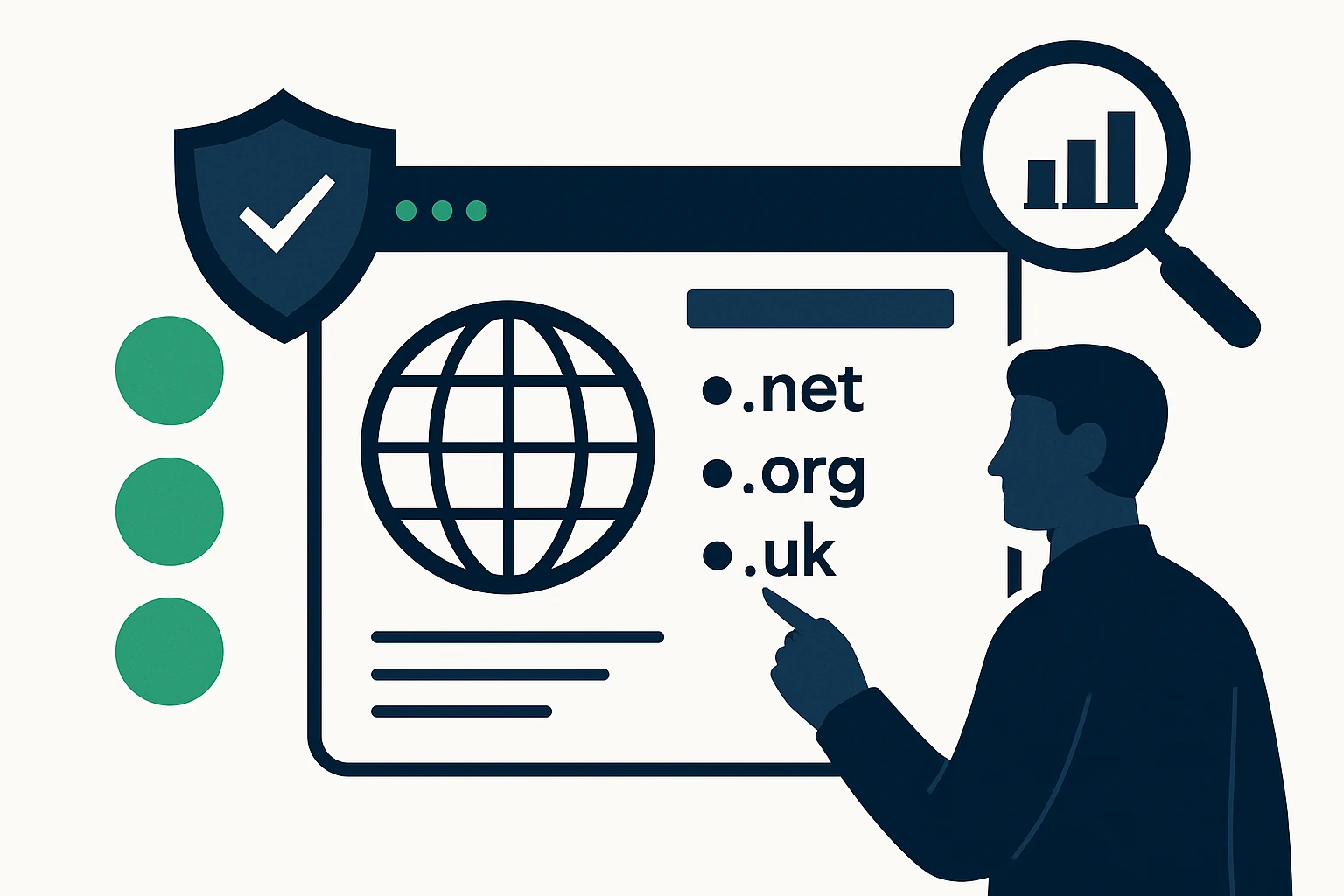
For teams specifically looking to acquire bulk lists by TLDs, several options exist. The following WebAtla pages provide dedicated lists by TLD that align with the intent of this article: download .net domain lists, download .org domain lists, and download .uk domain lists. These pages illustrate the practical possibility of segmenting data by TLD to support targeted brand protection workflows.
Beyond bulk data, many security teams rely on complementary sources for corroboration and enrichment. Authoritative registries and industry organizations provide baseline information about the DNS and domain ecosystem. For context, ICANN describes the DNS as the address book of the Internet and outlines how the domain name space is structured and managed, including the role of registries and registrars. This governance backdrop helps explain why bulk lists must be used responsibly and in combination with other security signals. ICANN: About Domain Names. (icann.org)
From data to defense: a practical workflow for brand protection and phishing defense
Raw domain lists are stepping stones, not endpoints. A defensible workflow translates bulk data into risk signals that your security stack can act on. The following framework is designed for teams that want to combine bulk domain data by TLD with brand context, threat intelligence, and rapid incident response:
- Ingest and normalize – Standardize domain formats, unify time stamps, and deduplicate across data sources. Normalize brand lexicons and canonical spellings to catch typosquats and blends (e.g., brandname-xyz, secure-brandname, similar-sounding variants).
- Enrich for context – Add whois/registrar data, DNS records, and registration date. Enrichment helps distinguish newly registered domains from long-standing domains and parked domains that don’t pose immediate risk. See industry discussions on whois data and DNS infrastructure for context. (verisign.com)
- Match against risk criteria – Apply lexicon-based or machine-learned similarity scoring to identify impersonation opportunities, typosquatting, or lookalike domains that could mislead customers. This is a core capability of modern threat intelligence platforms.
- Triaged alerting – Prioritize domains that register under high-risk TLDs, use brand-infringing spellings, or map to known phishing infrastructure. Contextual alerts reduce noise and accelerate incident response.
- Response playbooks – Establish containment and takedown workflows, communications with brand teams, and customer-facing guidance for suspected brand abuse or phishing sites.
- Feedback loop – Use outcomes (false positives, confirmed abuse) to refine data sources and scoring models over time, closing the loop between data quality and risk decisions.
By design, bulk lists feed these steps, but the real value comes from applying brand context and risk criteria to filter and elevate signals. The bulk data itself is only as good as the enrichment and the rules you apply to interpret it. Industry practice increasingly emphasizes a layered approach: bulk domain data plus DNS/Whois context plus threat intelligence signals.
Domain Risk Triaging (DRT) Framework
- Discovery – Identify newly registered domains in target TLDs and those that resemble the brand.
- Assessment – Evaluate the domain against risk factors: lexical similarity, hosting infrastructure, age, geolocation, and known malicious indicators.
- Triaging – Rank domains by likelihood of abuse and potential impact on customers or revenue.
- Response – Initiate takedown requests, brand protection notices, or customer advisories as appropriate.
- Review – After-action review to refine data sources and scoring rules.
Limitations, trade-offs, and common mistakes
Bulk domain data offers scale, but it also introduces challenges. Common mistakes include treating lists as finished solutions instead of raw inputs for risk assessment, failing to account for data licensing and privacy rules, and relying on a single data source to define risk. Some practical limitations to anticipate include:
- Quality vs. quantity – Large lists contain many parked or inactive domains. Without enrichment, these can trigger noise and misprioritized actions.
- Licensing and compliance – Bulk data often comes with usage constraints. Ensure licenses align with your security program and display the data responsibly, particularly for incident response and customer communications.
- Timeliness – Domain registrations happen continuously. Suboptimal refresh cadence can cause delayed signals, reducing the value of early-warning capability.
- Context matters – Lexical similarity alone is insufficient. Combine brand lexicons, campaign context, and historical abuse patterns to reduce false positives.
- ASR and WHOIS evolution – Whois privacy and RDAP protocols are changing, ensure your enrichment layers stay aligned with current data governance standards.
For evidence-based context on why this matters in practice, researchers have highlighted that impersonation tactics like combosquatting and typosquatting remain active avenues for phishing and brand abuse, underscoring the need for robust data enrichment and contextual scoring. Expert insight from industry studies supports the view that broad domain data must be filtered and interpreted to be useful. (usenix.org)
Expert insight and common pitfalls to avoid
Industry practitioners emphasize that bulk domain data is a foundational input, not a complete defense. A senior threat analyst notes: “Bulk domain lists are most effective when paired with brand-specific lexicons, historical abuse patterns, and automated monitoring that scales with evolving phishing techniques.” In other words, data must be contextualized to translate into effective risk decisions. (usenix.org)
Limitations to watch for include the risk of over-reliance on the presence of a domain in a list as a definitive indicator of abuse, and the temptation to chase every newly registered domain rather than prioritizing signals with customer impact or brand exposure. A disciplined, evidence-based approach helps avoid misallocation of security resources. DNS governance and infrastructure basics also remind us that the landscape is complex and dynamic, so ongoing education and governance are essential. (icann.org)
Conclusion: turning bulk domain data into actionable protection
Bulk domain lists for .net, .org, and .uk provide a scalable backbone for digital risk intelligence programs focused on brand protection and phishing defense. The true value emerges when lists are enriched, contextualized, and integrated into a decision-making framework that prioritizes risk and customer impact. By combining credible data sources (such as reputable bulk lists) with a robust workflow like the Domain Risk Triaging framework, organizations can detect impersonation schemes earlier, respond faster, and reduce the harm caused by brand abuse. The goal is not to chase every domain, but to illuminate the signals that truly matter for your brand and customers.
For teams seeking concrete data pathways, WebAtla offers dedicated pages for bulk domain data by TLD, including .net, .org, and .uk, which can be integrated as part of a broader risk program. download .net domain lists, download .org domain lists, and download .uk domain lists illustrate how targeted data sources support proactive protection, when paired with the right enrichment and workflow.
As you design or evolve your program, remember that data quality, licensing discipline, and contextual scoring are as important as the data itself. With careful sourcing and disciplined processing, bulk domain lists can become a reliable compass for digital risk governance in a fast-evolving online landscape.