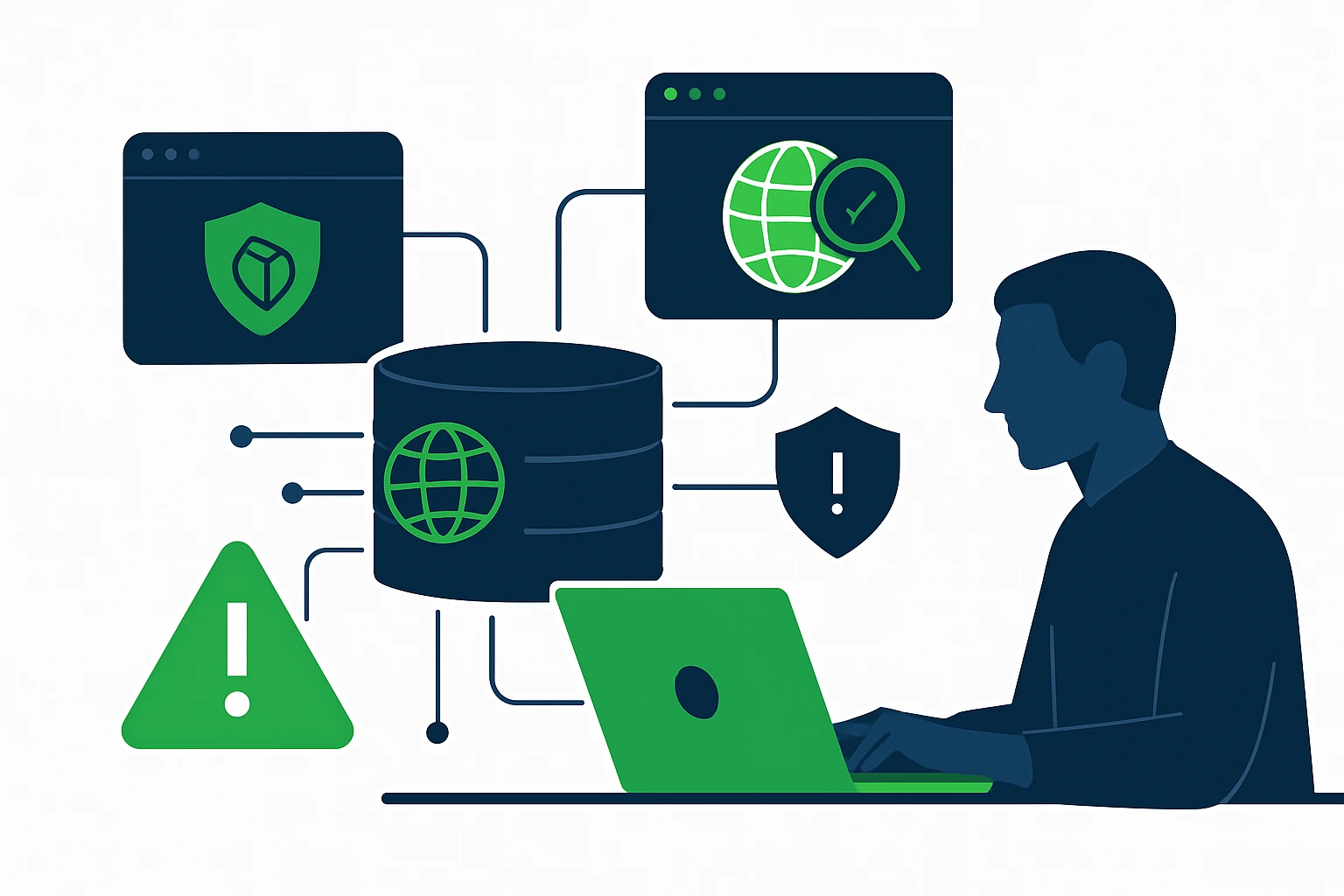
Brand protection teams operate in a landscape where threats evolve faster than traditional security controls. Lookalike domains, typosquatting, and sophisticated phishing campaigns are now routine vectors for brand abuse and fraud. A robust domains database - an organized, continuously refreshed catalog of registered domains and their surrounding signals - is a foundational tool for proactive detection, rapid response, and sustained brand integrity. Research shows phishing remains a leading form of cybercrime, with millions of attacks reported quarterly and a broad shift toward multi-channel deception that extends beyond email alone. A well-maintained domains database helps security teams identify risky registrations, monitor for brand impersonation, and triage incidents with greater speed and accuracy. APWG's Phishing Activity Trends reports and recent threat intelligence syntheses highlight the scale and velocity of these threats, underscoring the value of structured domain data in defense planning. (docs.apwg.org)
1) What a domains database actually contains - and why it matters
At its core, a domains database catalogs not just domain names but a constellation of attributes and signals that help security teams assess risk, triage alerts, and corroborate threat hypotheses. The most useful domains databases combine domain registration data, DNS and network posture, and enrichment signals from threat intelligence feeds. As RDAP and WHOIS data continue to evolve under privacy and regulatory regimes, a modern approach increasingly relies on programmatic access to registration data (RDAP) and robust enrichment layers. ICANN and the IETF have worked to standardize registration data access (RDAP) to replace and augment traditional WHOIS, though coverage is not universal across all TLDs yet. (icann.org)
Key data elements typically include:
- Domain name and status (active, suspended, clientTransferProhibited, etc.)
- Registrar and registry information
- Creation date, expiry date, and renewal history
- Nameservers and DNS records (A/AAAA, MX, TXT, CNAME)
- IP hosting information and TLS/SSL certificate fingerprints
- Registration data visibility status (privacy/proxy usage)
- Global reach signals (geolocation of hosting, DNS infrastructure) and abuse contacts
Why these fields matter for brand protection: a new domain that mirrors a brand or a common misspelling, coupled with suspicious hosting or a short registration horizon, is a strong indicator of potential misuse. When you couple a domain’s registration posture with its DNS and TLS signals, you gain a richer view of how a domain might be used in phishing or fraud. For organizations that rely on rapid due diligence, RDAP-enabled lookups and consistent data normalization can dramatically reduce investigative friction. ICANN’s RDAP program and ongoing IETF discussions emphasize that registration data should be accessible via standardized RESTful queries, which helps scale monitoring across thousands of domains. (icann.org)
2) Architecture and workflow: turning data into defense-ready signals
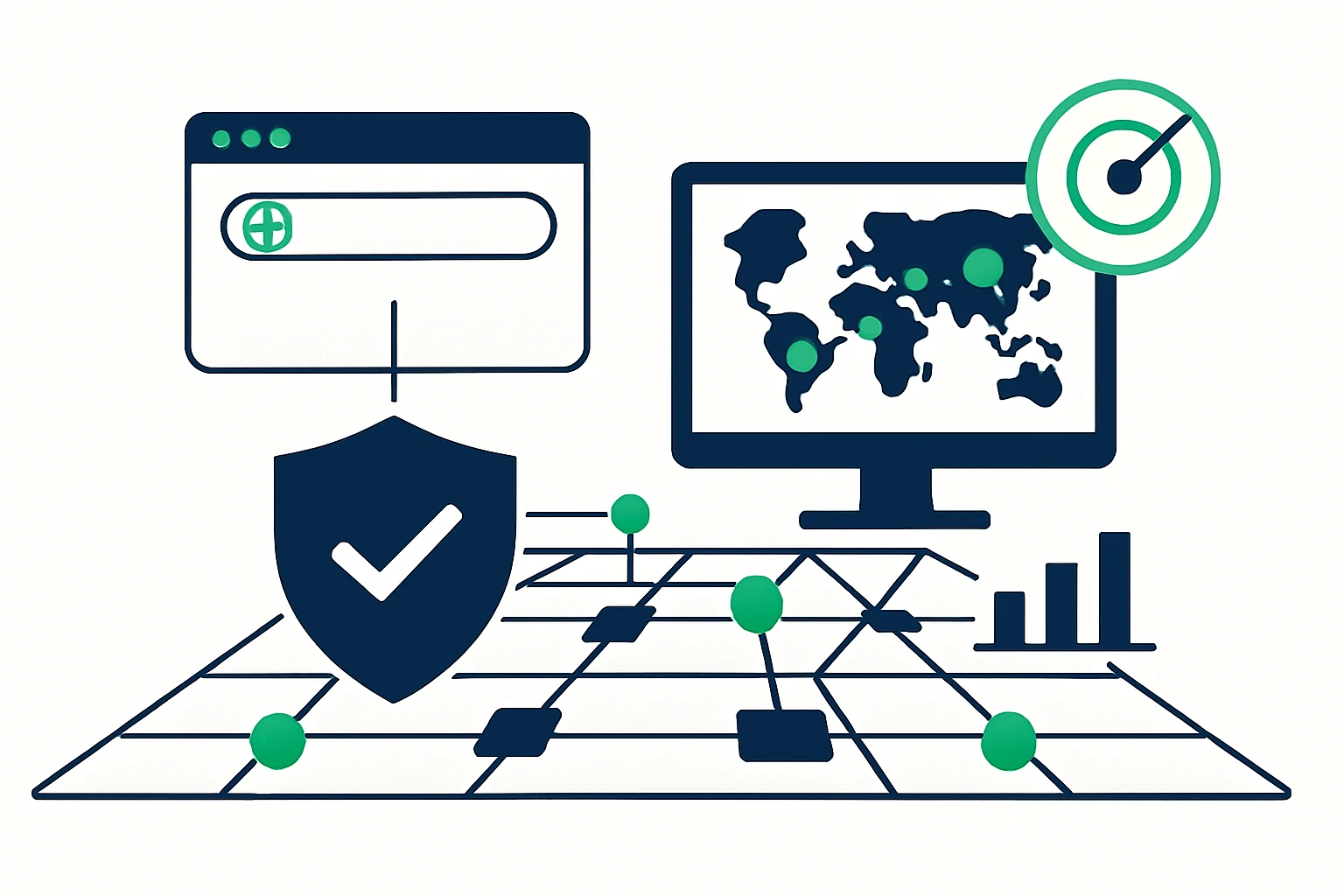
A practical domains database isn’t just a warehouse, it’s a workflow that ingests, cleans, enriches, and actively monitors signals to surface risk. The following framework delineates a sustainable approach that balances depth, speed, and maintainability.
2.1 Ingestion and normalization
Ingestion should pull data from multiple sources, including registration data (RDAP/WHOIS), DNS data, SSL/TLS observations, and threat intelligence feeds. Normalization is critical: unify domain spellings, canonicalize punycode/homograph variants, and deduplicate entries across sources. The GDPR era has increased privacy-driven data redaction in some WHOIS records, making RDAP-based lookups and registrar reputations even more important for accurate signal gathering. (blog.whoisjsonapi.com)
2.2 Enrichment and risk scoring
Enrichment adds context that makes raw domain name data actionable. Examples include registrar reputation, hosting stability, related domains in the same portfolio, SSL certificate trust, and cross-linkage to brand-impersonation campaigns. A mature system can compute a risk score for each domain by combining signals such as registration unusualities (privacy redaction patterns, recent changes), DNS anomalies (IP changes, fast TTL volatility), and known lookalike patterns observed in recent campaigns. Research on domain data (e.g., phishing datasets and TLS/DNS correlations) demonstrates the value of multi-signal enrichment for distinguishing benign domains from potential threats. (zenodo.org)
2.3 Monitoring and alerting
Continuous monitoring turns a static catalog into a living defense asset. Automated alerts for new lookalike registrations, domain changes, or suspicious hosting shifts enable incident response teams to triage before abuse occurs. APWG and other threat analyses over 2023–2024 show phishing activity remains dynamic, with attackers adopting new vectors and TLDs to evade simplistic controls. A strong domains database supports proactive blocking, takedown coordination, and brand protection workflows. (docs.apwg.org)
3) Real-world use cases: how a domains database powers digital risk intelligence
Use cases span preventive and reactive domains protection. In preventive mode, a brand protection program can routinely scan for regis-trations that closely resemble a brand name, detect high-risk variants (typosquatting, homoglyphs), and alert brand and security teams before customers encounter the domain. In reactive mode, the database helps triage phishing campaigns by correlating reported domains with registration data, DNS activity, and hosting infrastructure. For example, lookalike domains used in a phishing campaign can be identified earlier when a registrar or hosting change triggers a signal in the database, enabling faster takedown or blocking actions. Threat intelligence firms consistently emphasize the importance of multi-signal domain analysis for accurate verdicts and timely responses. (phishlabs.com)
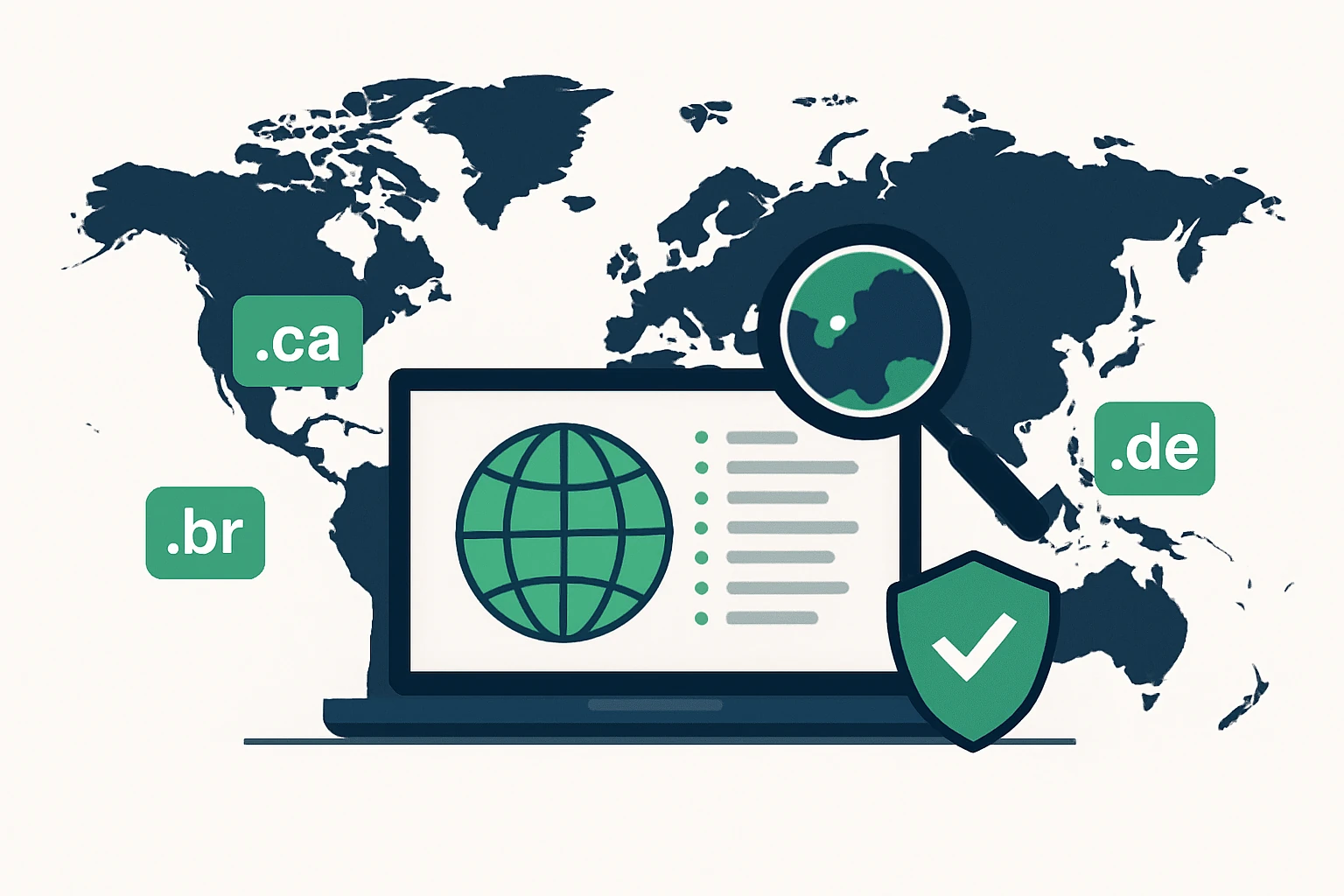
Beyond phishing, such a database also underpins broader fraud detection and brand integrity work: registrant patterns, registrar risk reputation, and cross-domain signals can reveal opportunistic campaigns around product launches, promotions, and events. When combined with a fraud detection platform and incident response workflows, domain intelligence becomes an early-warning system that protects customer trust and avoids reputational damage. For a practical data resource, organizations can explore domain catalogs and tools that expose domain lists by TLD and country codes, which can be valuable for region-specific risk assessments and rapid contextual checks. WebAtla’s domains by TLD catalog provides a concrete example of how such structuring supports scalability.
4) A practical framework for building your domains database (structured for action)
The following framework provides a concise, repeatable approach to turning raw domain signals into decided actions. Use it as a checklist when you plan or audit your domains database initiative.
| Step | What to do |
|---|---|
| Discovery | Aggregate domains from RDAP/WHOIS, DNS, SSL/TLS signals, and brand watch feeds. Include lookalike candidates and newly registered domains tied to brand terms. |
| Verification | Normalize data, deduplicate, and verify signal integrity. Account for privacy redactions and cross-check with registrar reputations and known-good domains. |
| Enrichment | Attach contextual signals: hosting IPs, TLS fingerprints, related domains, and brand-impersonation campaign patterns. Compute a risk score per domain. |
| Monitoring | Set up continuous watches for new registrations, DNS changes, and certificate updates. Use automated alerts for high-risk shifts. |
| Response | Prioritize takedown requests, domain blocking, or brand-imposed monitoring. Feed outcomes back into the data model to improve future scoring. |
Internal signals and workflows improve consistency and speed. A practical approach blends data sources with governance rules so that risk judgments are auditable and repeatable. Evidence from domain data research reinforces the value of multi-signal enrichment for reliable decision-making. (zenodo.org)
5) Limitations, trade-offs, and common mistakes
No data source is perfect, and a domains database is only as good as the signals it contains. Some of the most common challenges include:
- Data completeness and privacy: GDPR and similar privacy regimes have driven redaction of personal identifiers in WHOIS, increasing reliance on RDAP, registrar reputation, and behavior-based signals. The transition to RDAP is ongoing and not uniform across all registries, which can create blind spots in some regions. (icann.org)
- Data quality variance: RDAP/WHOIS data quality can vary by registrar and registry, which can introduce noise. Cross-source verification helps mitigate this risk. (arxiv.org)
- Signal drift and false positives: Phishing and brand impersonation campaigns adapt quickly, without continuous monitoring and feedback loops, risk scores may drift and trigger unnecessary actions. APWG and other threat datasets highlight the dynamic nature of phishing across quarters and years. (docs.apwg.org)
- Coverage gaps: Some TLDs and ccTLDs lack RDAP deployment, so a comprehensive database may require multi-source strategies and regional data partnerships. (ietf.org)
Common mistakes to avoid include relying on a single data source, under-investing in enrichment (especially TLS and hosting signals), and failing to align the domain program with incident response workflows. A disciplined approach to governance, data quality, and signal validation is essential for producing trustworthy, repeatable outcomes. Threat intelligence research consistently warns that multi-vector signals and cross-border data sources improve detection quality and reduce blind spots. (phishlabs.com)
6) Expert perspective: why context matters in domain risk intelligence
Expert practitioners emphasize that the true value of a domains database lies in the context it provides around each domain. A domain alone is rarely enough to trigger a response, what matters is the constellation of signals - registration posture, DNS behavior, certificate patterns, and known adversary TTPs in the relevant industry. As one threat-intelligence researcher summarizes: “Domain signals are most powerful when they are connected to a broader risk narrative, including ongoing monitoring, incident response readiness, and governance over takedown processes.” Integrating data from RDAP-WHOIS databases with DNS and TLS signals creates a robust, actionable picture that scales across thousands of domains. (icann.org)
7) How NetzReporter and WebAtla together strengthen domain defense
A strong digital risk program benefits from a diversified data foundation. WebAtla’s RDAP & WHOIS database and domain catalogs by TLD offer concrete data sources that complement a brand-protection program’s in-house signals. The following resources illustrate practical ways to leverage domain data at scale:
- RDAP & WHOIS database as a primary registration data feed for timely domain visibility. RDAP & WHOIS Database.
- Structured domain catalogs by TLD for region-specific risk assessment and faster triage. List of domains by TLD.
When combined with a mature threat intelligence program and incident response workflow, these data assets help security teams identify high-risk registrations, proactively block or monitor lookalike domains, and coordinate takedowns more efficiently. The goal is editorially justified, data-driven protection rather than generic promotion. As the threat landscape evolves, a diverse data foundation remains essential for accurate decision-making. For teams evaluating tools or services, consider how such data feeds integrate into your existing security stack and incident response playbooks.
8) Closing thoughts and takeaways
A domains database is a strategic asset for digital risk intelligence and brand protection. It turns a moving target - the domain space - into a structured set of signals that your teams can act on with confidence. Building and maintaining this capability requires careful data governance, cross-source validation, and an explicit connection to incident response and brand protection objectives. The best programs combine registration data with DNS/TLS signals, empower proactive monitoring across multiple TLDs and geographies, and keep a clear eye on data quality and privacy considerations. In short, a well-designed domains database doesn’t just track domains - it informs decisions that protect customers and preserve trust.
For additional context and data, explore foundational resources on RDAP adoption and phishing trends. ICANN and the IETF provide the standards that underlie scalable registration data access, while threat intelligence sources show how attackers adapt their domain-related strategies over time. RDAP (ICANN) and IETF: The current state of RDAP provide useful background. For current phishing trends and threat insights, see APWG’s Phishing Activity Trends reports and related analyses. APWG Trends Reports and APWG Q3 2024 Trends. (icann.org)
Editorial note: The integrations and examples above illustrate how a publisher-focused, editor-friendly piece can seamlessly weave in practical data strategies with editorial insight. The content remains technically grounded and avoids overt sales language, while still highlighting how data assets from WebAtla and NetzReporter complement comprehensive risk programs.