Introduction: why brands must rethink domain risk in a proliferating namespace
As brands grow their digital footprints, the domain space expands far beyond the traditional .com. ICANN tracks the ongoing expansion of generic top-level domains (gTLDs) and the associated governance, security, and brand-protection implications. In a landscape where hundreds of new TLDs can exist, including sector- or brand-specific extensions, the risk of impersonation, cybersquatting, and customer confusion rises correspondingly. For brand guardians, this means proactive visibility across the entire domain surface - not just your primary site. ICANN itself emphasizes both the opportunities and the responsibilities of operating a new gTLD, including the governance, security, and long-term commitments involved. ICANN: Benefits and Risks of Operating a New gTLD.
Industry observers also note that the proliferation of new gTLDs complicates risk management. In practical terms, many brands now face domain registrations across dozens of TLDs, making comprehensive monitoring essential. A detailed overview from industry analysts highlights that the expanding universe of gTLDs increases the risk of domain squatting and consumer confusion, underscoring the need for continuous monitoring and strategic prioritization. DN.org: Guarding Brands in the Expanding Universe of New gTLDs.
Why new gTLDs matter for brand protection and risk intelligence
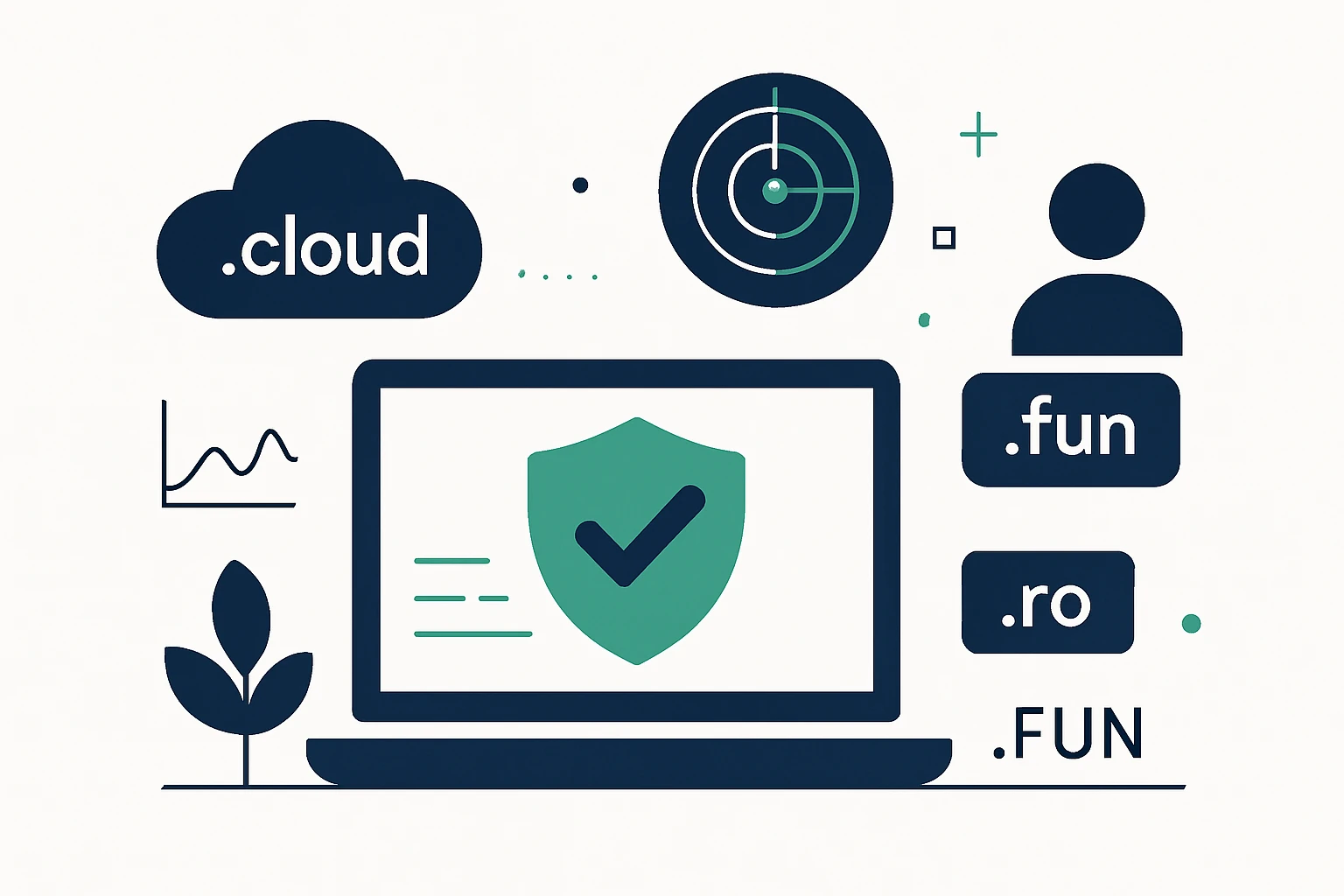
The basic premise is straightforward: a brand isn’t protected by a single domain name, it’s protected by the entire ecosystem of domains that could be used to deceive customers or dilute brand integrity. New gTLDs - such as .cloud, .ro, and .fun - introduce more surface area for potential abuse, making proactive monitoring critical. ICANN’s program documentation and analyses emphasize that broader namespace expansion requires robust risk management, including rights protection mechanisms and diligent brand monitoring. ICANN: Benefits and Risks of Operating a New gTLD and The New gTLD Program.
For practitioners, this translates into a practical requirement: map risk not just to owned domains but to the surrounding domain space that could be used to mislead customers. The DN.org piece cited earlier makes the case for prioritizing monitoring efforts when new gTLDs proliferate, because a large, dynamic namespace increases both attack opportunities and the likelihood of consumer confusion. DN.org.
The role of digital risk intelligence in domain monitoring
Digital risk intelligence (DRI) is the disciplined application of data sources, analytical workflows, and expert interpretation to identify, assess, and respond to domain-based threats. A mature program combines automated signal collection with human vetting to separate true risk from noise. In practice, DRI-powered domain monitoring tends to cover:
- Detection of registrations that resemble a brand (typosquatting, homoglyphs, and infringing strings).
- Coverage across gTLDs and ccTLDs, leveraging broad data feeds and security models to identify active domains and their registrants.
- Correlation with other risk signals (phishing emails, social media impersonations, and content misuse) to prioritize takedown or enforcement actions.
RDAP vs. WHOIS data is a core data consideration in many modern domain-monitoring stacks. RDAP provides structured, JSON-based registration data and is increasingly adopted as part of modern risk tooling, complementing older WHOIS approaches. ICANN and industry players highlight how RDAP adoption and CZDS zone data can improve visibility into the namespace, especially as policy and privacy protections evolve. ICANN: Centralized Zone Data Service and RDAP considerations and RIPE: RDAP vs. WHOIS.
A practical monitoring framework for domain risk across .cloud, .ro, and .fun
Below is a concise framework to make domain monitoring actionable. It is designed to be adaptable for in-house teams or outsourced risk platforms and to align with industry best practices from major governance bodies and risk vendors.
Framework for Domain Risk Monitoring
-
Discovery: build a baseline inventory of owned domains and map potential risk strings, including brand-name variants, common misspellings, and sector-relevant terms across target TLDs (e.g., .cloud, .ro, .fun).
- Sources may include CZDS zone files, passive DNS, and TLD registries' public data, where available.
-
Data Ingest & Normalization: aggregate registrations from multiple TLDs and normalize registrant data, SSL cert logs, and hosting footprints to enable cross-signal correlation.
- Avoid over-reliance on a single feed, combine WHOIS-like data with RDAP data when possible for richer context.
-
Risk Scoring & Triage: assign risk scores to domains based on similarity to your brand, potential for confusion, and exposure (e.g., presence of content that imitates your site or phishing lure potential).
- Include a severity tier and recommended action (monitor, request takedown, or take legal steps).
- Verification & Context: perform human vetting on top-risk domains, verify ownership, and assess intent. Consider cross-referencing with your rights protection mechanisms (see RPM considerations in ICANN materials).
- Response & Enforcement: coordinate with registries, registrars, or legal teams for takedowns, warning notices, or policy-based actions. Tie actions to incident-response playbooks and DMARC/brand-protection workflows where relevant.
- Review & Governance: run quarterly reviews of risk scores, adjust thresholds, and update detection rules as new gTLDs emerge and attacker tactics evolve.
Expert note: industry observers emphasize that a successful monitoring program blends proactive registration strategies with ongoing surveillance, because even defensive registrations cannot cover every risk in a rapidly expanding namespace. A brand-protection strategist would warn against relying solely on domain registrations, signal integration across phishing protection, content integrity checks, and incident response is essential. For example, risk platforms that monitor SSL certificates, DNS zones, and domain variations - coupled with expert adjudication - toster a more reliable defense than any single data feed. This perspective aligns with risk-management best practices documented by practitioners and governance bodies. Fortra: Domain Monitoring in Brand Protection and BrandShield: Brand Protection Best Practices.
Data sources and practical data points you can lean on today
To operationalize the framework, consider the following data sources. While some may require licenses or service agreements, you can begin with public data to illustrate the value of structured monitoring:
- Top-level domain registries' data and CZDS zone files for coverage across a wide range of TLDs, including .cloud and other newer extensions.
- RDAP and WHOIS data to enrich domain-ownership context as privacy protections evolve, RDAP is increasingly adopted due to its structured responses and improved privacy controls.
- SSL/TLS certificate logs and hosting indicators to determine active domains that resolve to brand-relevant infrastructure.
For teams that want a concrete, defensible data set, some organizations opt to download lists of specific domains by TLD (for example, download list of .cloud domains, download list of .ro domains, download list of .fun domains) as part of their baseline monitoring. These lists are often used to seed discovery and to test alerting workflows, however, they must be used in compliance with data-usage policies and licenses. See ICANN and industry discussions on how data access and data governance influence risk programs. ICANN: RDAP/WID data considerations.
Limitations, trade-offs, and common mistakes in domain monitoring
While a robust monitoring program adds resilience, it also comes with trade-offs. Three practical considerations deserve emphasis:
: broad signal aggregation can yield many matches that look suspicious but are benign. Rigorous triage rules and human-in-the-loop review are essential to avoid wasted effort. This is highlighted by industry practitioners who balance automation with expert oversight. BrandShield: Brand Protection Best Practices. : as ICANN notes, the expansion of gTLDs introduces complexity, governance obligations, and ongoing costs, organizations must prioritize domains based on risk relevance, market presence, and potential for consumer confusion. ICANN: Benefits and Risks of Operating a New gTLD. : evolving privacy regimes can limit access to ownership data in some TLDs, making RDAP-based workflows and alternative data signals even more critical for visibility. Industry discussions and RDAP-related resources discuss how to adapt to these shifts. RIPE: RDAP vs. WHOIS.
In short, a successful program accepts trade-offs: more data can mean more risk signals, but without disciplined triage and governance, teams risk alert fatigue and ineffective responses.
Integrating WebAtla's cloud-domain data into a risk program
WebAtla’s cloud-focused data offerings provide a practical way to operationalize the framework without starting from scratch. The product page for cloud-domain data and the broader list of domains by TLDs illustrate how one data-enabled approach can help teams build baseline coverage and track risk signals across TLDs such as .cloud, .org, and others. Consider starting with:
- WebAtla Cloud TLD data: WebAtla Cloud TLD data - a focused source for cloud-related domains.
- List of domains by TLDs: WebAtla TLD index - a broad capability to scope risk across multiple extensions.
- RDAP & WHOIS database access: WebAtla RDAP & WHOIS database - enrich domain context and enable rapid triage in your workflow.
Integrating WebAtla’s data with a practitioner’s risk workflow enables a defensible, policy-aligned approach to monitor, triage, and respond to domain-based threats across the .cloud, .ro, and .fun spaces, while maintaining a clean line of sight to more established extensions. This integration should be complemented by a governance model that includes regular reviews, escalation paths, and alignment with brand-protection goals. See additional data sources and domain intelligence considerations in ICANN and RPM guidance noted earlier.
Limitation and common mistakes: what to watch out for
Even the best-designed monitoring program can fail if certain pitfalls are ignored. The most common mistakes include over-committing to one data feed, failing to account for privacy-driven data gaps, and not integrating signal output into a usable incident-response workflow. A disciplined approach to failure modes is essential: set clear thresholds, ensure cross-functional buy-in, and align with legal and brand-protection policies. Expert commentary from industry practitioners emphasizes that defensive registrations are a starting point, not a complete solution, ongoing monitoring across the namespace, coupled with threat intelligence and incident response playbooks, yields lasting protection. Fortra: Domain Monitoring in Brand Protection.
Conclusion: a proactive, evidence-based path to domain risk resilience
The namespace is expanding, and so are the opportunities and risks that come with it. A disciplined domain risk program - rooted in digital risk intelligence, supported by structured data signals (RDAP/WHOIS), and guided by an explicit framework - enables brands to reduce confusion, deter impersonation, and protect the customer experience. By combining baseline domain discovery with ongoing signal integration and well-defined response workflows, organizations can stay one step ahead in the evolving digital landscape. The governance and insights from ICANN and other industry leaders reinforce that proactive monitoring across the full spectrum of TLDs is not optional flair, it is a foundational part of brand protection in the modern Internet era. For teams seeking a practical path to scale, WebAtla’s cloud-domain data capabilities offer a concrete way to operationalize this strategy in a compliant, integrated manner.