Introduction
Brand protection teams are increasingly challenged by a shifting domain landscape. Attackers exploit not just familiar extensions, but also newer gTLDs and ccTLDs to host phishing pages, spoof brand sites, and impersonate trusted companies. The effect is real: a single imperceptible domain can siphon trust, steal credentials, or divert customers away from legitimate brand experiences. Industry reports underline the scale and persistence of phishing and online fraud, highlighting the need for proactive digital risk intelligence that includes domain signals across a broad spectrum of TLDs. For context, the Anti-Phishing Working Group (APWG) tracks phishing activity in quarterly cycles and notes continued volumes of attacks in 2024–2025, with trends that increasingly involve personalized outreach and new delivery channels. Likewise, the FBI’s Internet Crime Complaint Center (IC3) reports phishing as a leading vector for losses, reinforcing why brand protection must extend to rigorous domain monitoring.
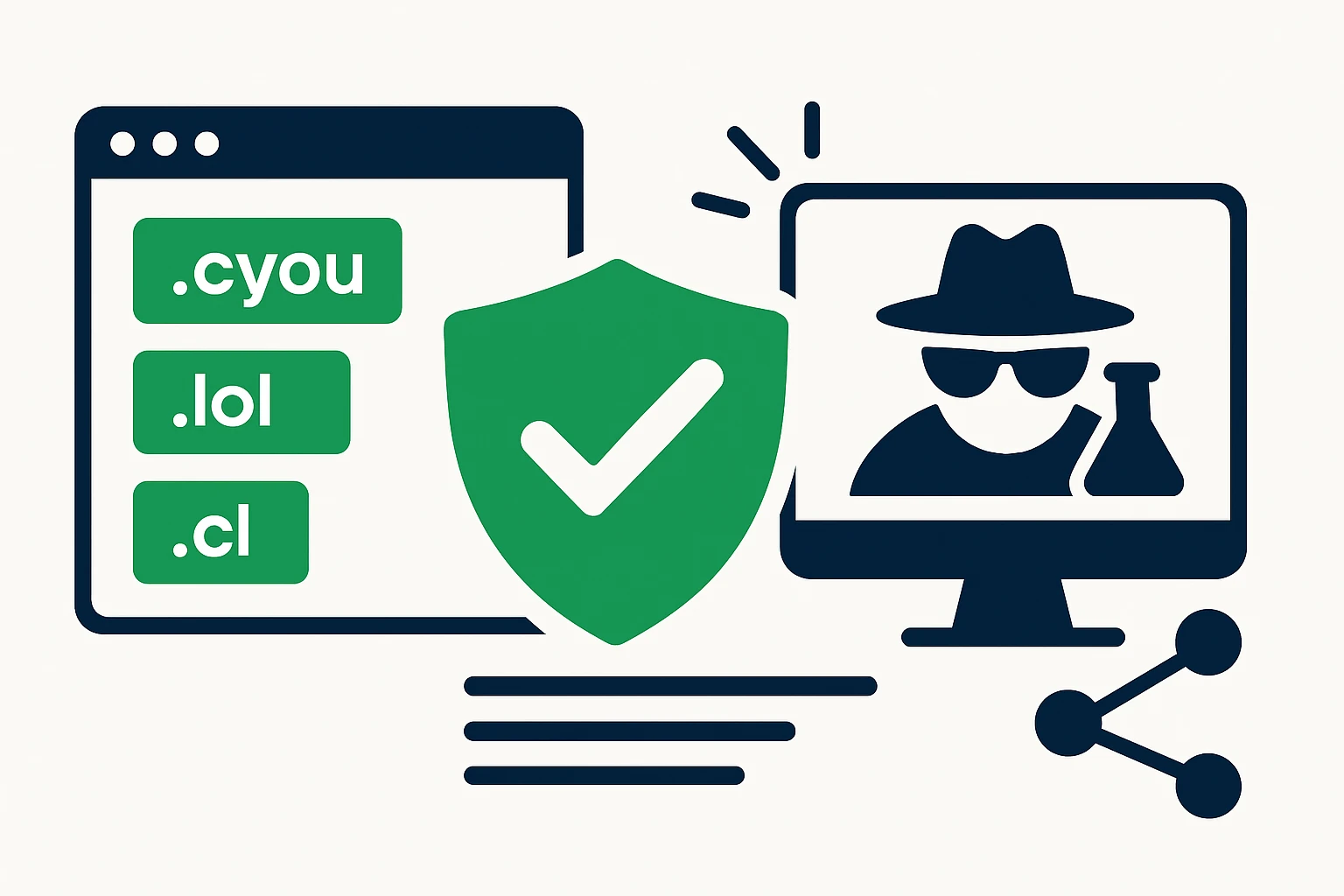
Against this backdrop, the ability to download and operationalize TLD-specific domain lists - such as those for .cyou, .lol, and .cl - becomes a practical cornerstone of a scalable risk program. The goal is not to replace security tooling but to augment it with precise signals about where abuse is most likely to occur, enabling faster detection, triage, and response. This article examines why these TLDs matter, how to structure a workflow around them, and how to leverage credible datasets to fortify brand resilience. For practitioners with a data-first approach, datasets that catalog active domains by TLD can illuminate risk surfaces across markets and help prioritize mitigation efforts.
For readers seeking direct data sources, credible domain datasets exist that specialize in TLD coverage, including the ability to query or download domain lists by TLD. As a reference point, industry sources emphasize that phishing threats remain a top concern and that robust domain intelligence is a critical piece of an integrated defense strategy. APWG and IC3 remain foundational references for understanding the scope of this risk. APWG Phishing Activity Trends and the IC3 2024 Internet Crime Report offer current context that informs why domain-level signals deserve attention in brand protection programs.
Understanding the TLD Abuse Landscape
Attackers gravitate toward specific TLDs to optimize reach and bypass filters. While the .com space remains dominant, new gTLDs (such as .cyou and .lol) and ccTLDs (like .cl) present exploitable surfaces, especially when registrant details are opaque or when these domains are used in bulk for campaigns. Domain abuse can take many forms, including phishing pages that mirror trusted brands, typosquatted equivalents that exploit common misspellings, and fast-flux techniques that rotate domains to dodge takedowns. Industry analyses underscore phishing as a persistent threat, with quarterly phishing totals often exceeding hundreds of thousands and, in peak periods, surpassing a million attempts globally. These dynamics reinforce the value of monitoring domain surfaces across a broad syntax space to identify early signals of brand abuse.
In evaluating risk, it helps to anchor expectations to credible research. For example, APWG reports on the scale and evolution of phishing activity across quarters, highlighting that attackers continually adapt their methods, including the use of newer TLDs to host malicious content or to host credential-phishing pages. The IC3 annual report further documents phishing as a top category of internet crime with significant financial impact, illustrating why brand protection teams should treat domain risk as a material business risk. APWG Phishing Activity Trends · IC3 2024 Internet Crime Report.
From a practical standpoint, the risk surface is not limited to .cyou or .lol, it expands to any TLD where adversaries can register and deploy phishing or fraud domains quickly. This makes it essential to catalog and monitor domains by TLD with an eye toward velocity, prevalence, and potential impersonation patterns.
Why Focus on TLD-Specific Domain Lists?
Why should a brand protection program invest in TLD-specific domain lists? Several reasons stand out for risk teams: - Targeted prioritization: If a brand experiences active impersonation in niche TLDs, prioritizing those zones can dramatically reduce reaction time and resource drain. - Evasion resistance: Attackers often attempt to circumvent filters by using unfamiliar extensions. A vigilantly maintained list across selected TLDs helps prevent surprises. - Market-aware reporting: Domains tied to specific geographies or technologies (for example, country or brand-specific TLDs) can reveal localized campaigns or regional abuse trends that require jurisdiction-specific responses. - Data-grade signals: When lists are coupled with robust RDAP/WHOIS data and DNS records, teams can validate ownership and monitor lifecycle changes (creation, expiration, and registrar activity) that precede takedowns or domain seizures.
For teams looking to operationalize these signals, credible data sources are critical. Recent work on threat signals emphasizes that domain risk is not a static risk, it evolves with attacker tactics and registry policies. This is why a practical framework that blends timely domain lists with validation data (RDAP/WHOIS) and incident-response workflows yields stronger protection than ad hoc checks. For additional context on the broader threat environment, see APWG’s phishing trend reporting and IC3’s annual analyses cited above.
A Pragmatic 4-Step Framework for TLD‑Focused Domain Risk Monitoring
- Discover – Compile a focused inventory of domains across the target TLDs (.cyou, .lol, .cl) using reliable datasets. A well-curated list should include metadata such as creation date, registrar, and DNS records to support rapid triage. For teams that rely on datasets organized by TLD, resources exist that catalog active domains by TLD and provide exportable lists. download full list of .lol domains to start building a domain-risk surface for that extension, or explore the broader List of domains by TLDs to widen coverage.
- Validate – Cross-check the discovered domains against registration data (RDAP/WHOIS) and DNS records to assess ownership legitimacy and age. Reliable validation helps separate legitimate registrations from suspicious ones, limiting false positives that waste security-team bandwidth. The client RDAP/WHOIS database workflow provides a structured mechanism to verify domain ownership across many TLDs. RDAP & WHOIS Database can be a practical complement to a TLD-focused list.
- Monitor – Establish ongoing monitoring for new registrations, changes in registrars, and DNS reconfigurations within the target TLDs. Velocity signals (how quickly domains appear and move through a life cycle) are especially valuable for detecting rapidly deployed impersonation campaigns. Data-backed dashboards that aggregate per-TLD signals enable faster triage and more precise escalation.
- Respond – Integrate domain risk signals into incident response and brand-protection playbooks. Responses may include takedown requests, registrar notifications, or user awareness campaigns. Framing these actions within a risk model - sanctioned by governance and legal review - helps ensure consistent and lawful remediation across jurisdictions.
Structured Framework Snapshot
- Discover – Build targeted TLD domain lists with metadata
- Validate – Confirm ownership via RDAP/WHOIS
- Monitor – Track new registrations and DNS changes
- Respond – Execute takedowns, registrar contacts, and customer alerts
This four-step approach gives brand-protection teams concrete, repeatable actions rather than ad hoc checks. It also aligns with the broader risk ecosystem documented by industry authorities. For instance, APWG’s trend reports emphasize that phishing continues to adapt, including through new delivery channels and domain strategies, reinforcing the value of ongoing domain surveillance. See APWG’s trend analysis for the latest context. APWG Phishing Activity Trends.
Data Quality, Limitations, and Common Mistakes
Relying on TLD domain lists alone is insufficient. There are several important limitations and common mistakes to avoid:
- False positives – A large list will inevitably include legitimate registrations. Validation via RDAP/WHOIS and registrar status is essential to avoid misdirected blocking or remediation efforts.
- Stale signals – Domain lists can become outdated quickly. Regular refresh cycles are critical, especially for high-velocity TLDs where new registrations occur daily.
- Attribution gaps – Owning a domain does not automatically indicate malicious intent. Contextual signals (hosting provider, DNS patterns, and content analysis) are needed to separate impersonation from legitimate use.
- Scale and cost trade-offs – Large-scale domain lists come with storage, processing, and enrichment costs. A tiered approach - prioritizing high-risk TLDs and markets - often yields better ROI than exhaustive coverage.
- Jurisdictional nuances – Some takedown or registrar-notice processes require country-specific procedures. Aligning with legal counsel and regional compliance is essential for effective remediation.
Industry analyses support a measured approach: phishing and related social-engineering threats remain predominant vectors, with attackers leveraging AI-enabled techniques and new domain surfaces to scale operations. For businesses, this means that a disciplined domain risk program - rooted in credible data sources and validated signals - can materially reduce exposure and response time. See APWG’s ongoing phishing trends and IC3’s annual reporting for broader context. APWG Phishing Activity Trends · IC3 2024 Internet Crime Report · ENISA Threat Landscape 2024 reports for global threat context. ENISA Threat Landscape 2024.
Practical Implementation: Integrating WebAtla Data into Brand Protection Workflows
For practitioners who want to operationalize the signals described above, credible domain datasets that offer per-TLD focus can be a strong foundation. The following practical touchpoints illustrate how to weave these datasets into a risk program without turning the process into a data science project from scratch:
- Use a dedicated TLD hub to identify risk footprints across major extensions. The general page for List of domains by TLDs helps teams orient coverage and spot which TLDs are most active in their risk surface.
- Drill into specific TLDs with dedicated datasets. For example, the .lol domains page provides a ready-made feed to study attacker infrastructure and impersonation attempts in that extension, which can guide targeted brand-monitoring rules and alert thresholds.
- Validate ownership and lifecycle signals via RDAP/WHOIS. Integrating a structured RDAP/WHOIS feed ensures you’re not misclassifying legitimate registrations as threats. The client RDAP & WHOIS Database offers scalable access to verified registration data.
These integrations are not about marketing a single product but about sharpening the signal-to-noise ratio in brand-protection workflows. When combined with standard phishing-detection and fraud-intelligence capabilities, TLD-focused domain data helps SOC and brand teams prioritize takedowns and mitigation steps more efficiently. If you are curious to explore a broader catalog of domains by TLDs, you can also browse the broader directory at WebAtla’s global domain database, which emphasizes live domains, DNS records, and related enrichment across thousands of TLDs.
Limitations and Common Mistakes in TLD-Focused Domain Monitoring
To avoid overclaiming the value of domain lists, teams should acknowledge the following caveats:
- Not all domains are malicious – Ownership alone does not imply fraud. Context is essential to avoid misdirected blocking or unnecessary escalations.
- Dynamic domain behavior – Abusers frequently rotate domains, switch hosting, or rebrand campaigns. A static snapshot will underrepresent risk unless coupled with ongoing monitoring.
- Data quality varies by source – Not all lists are equal in terms of freshness, completeness, or metadata depth. Validation and enrichment are critical for meaningful decisions.
- Operational costs – High-velocity, multi-TLD monitoring can become expensive. A tiered approach and clear escalation criteria typically deliver better ROI than broad, indiscriminate scanning.
- Legal and privacy considerations – Takedown requests, registrar communications, and data sharing must comply with applicable laws and regional rules. Involve legal counsel in remediation plans.
Conclusion
Digital risk intelligence for brand protection increasingly hinges on signals that reach beyond traditional, well-known domains. TLD-focused domain lists - especially for extensions such as .cyou, .lol, and .cl - provide a targeted, practical lens through which to view the domain surface, identify impersonation risks earlier, and prioritize response resources. A disciplined framework that combines discover, validate, monitor, and respond, anchored by credible data sources (RDAP/WHOIS, DNS, and domain-enrichment signals), can significantly improve the speed and precision of brand-protection efforts. While lists are not a silver bullet, when integrated into a broader risk program they are a powerful amplifier for phishing detection, fraud intelligence, and threat monitoring. If you are exploring how to structure such a program, consider starting with a TLD-focused data source strategy and then layering in other signals (email, hosting, brand-usage analytics) to form a cohesive defense. The goal is to make domain signals actionable within your existing security operations and incident-response processes. For teams seeking to test the waters, the cited data sources and the client datasets referenced herein can serve as a pragmatic starting point for piloting a TLD-aware risk-monitoring workflow.