Introduction: Why domain data matters in digital risk intelligence
In modern threat landscapes, attackers exploit the domain layer to launch phishing campaigns, impersonate brands, and harvest credentials. A single registrant record or a subtle variation in a domain name can be the first step in an attack chain. For security teams, access to accurate, timely domain registration data - such as WHOIS records and the newer RDAP responses - translates directly into faster detection, better brand protection, and smarter incident response. This article explains how RDAP and WHOIS data feed digital risk intelligence and outlines a practical workflow to turn data into defense.
RDAP vs WHOIS: What matters for risk intelligence
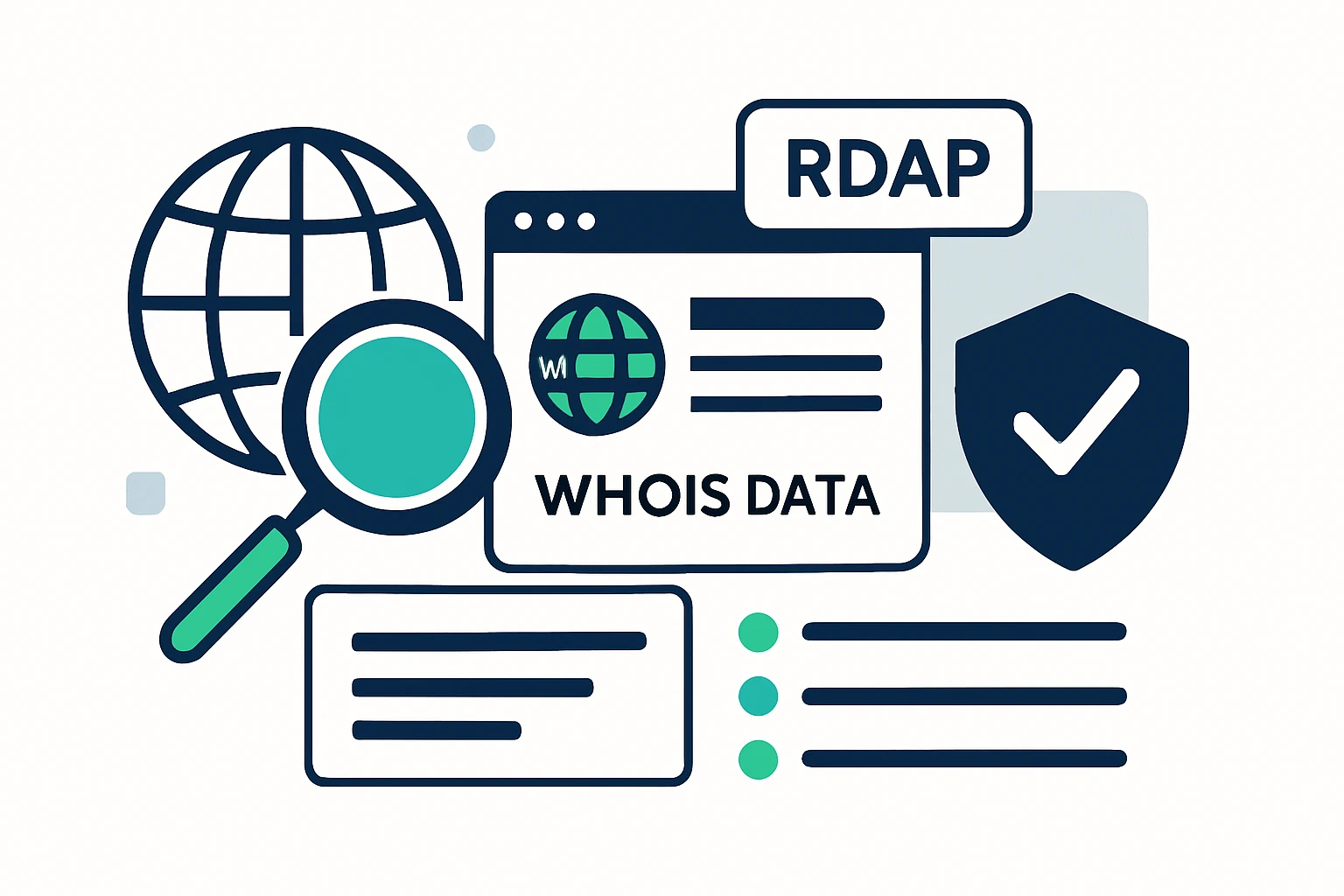
The traditional WHOIS service has long been a go-to source for registration details, but it has well-known limitations in data standardization, privacy, and international accessibility. The Registration Data Access Protocol (RDAP) was designed to address these gaps by offering RESTful access, structured responses, and more nuanced access controls. For organizations defending brands and domains, RDAP provides a more reliable foundation for automated risk scoring and cross-border investigations. ICANN highlights advantages including internationalization and secure access to data. RDAP overview.
In practice, many registries and registrars now publish RDAP endpoints, while some still offer traditional WHOIS. Security teams should prioritize RDAP when available, and gracefully fall back to WHOIS where RDAP is not yet offered. This multi-source approach is common in modern threat intelligence platforms. What is RDAP?
Why domain data matters for brand protection
Brand protection hinges on visibility: knowing when new domains appear that resemble a brand, when registrations occur in high-risk jurisdictions, and when existing domains get repurposed for scams. Domain monitoring tools can track new registrations, certificate activity, and DNS changes to surface risky domains before they are weaponized. Leading security providers frame brand protection as a continuous lifecycle - visibility, verification, action, and audit trails. This approach helps teams blunt typosquatting, impersonation, and domains used in phishing infrastructure. Brand protection domain monitoring.
A practical framework: Threat Detection Pipeline
Below is a concise, operational framework that fuses RDAP/WHOIS data with domain monitoring to support digital risk intelligence, brand protection, and phishing defenses. It is designed to be implementable within existing security playbooks and can be scaled with a dedicated data resource like a RDAP & WHOIS database.
- Data collection and normalization: Query RDAP and, when necessary, WHOIS for target domains and high-risk portfolios. Normalize registrant fields, dates, and nameserver data to a common schema to enable cross-source correlation. Consider supplementing with passive DNS and SSL certificate logs for fuller coverage. RDAP data supports standardized structure across jurisdictions. RDAP vs WHOIS.
- Risk scoring and triage: Build a risk score that weighs factors such as similarity to your brand, registration age, geolocation, registrar reputation, and historical abuse signals. Identity frameworks can draw on observed domain activity, certificate issuance, and DNS changes to tier risks for faster triage. Industry practice notes that a significant share of false positives arises from benign brand variations, careful calibration is essential. Domain monitoring insights.
- Alerting and workflow integration: Push high-confidence signals into security workflows (SIEM, SOAR, incident response tickets). Ensure alerts include evidence (registrant data, DNS records, certificate history) to support quick investigations. This is where an integrated RDAP/WHOIS data layer becomes a force multiplier for response teams.
- Investigation and takedown actions: Confirm impersonation risk, confirm brand confusion, and coordinate with registrars or domain owners for takedowns or domain changes when appropriate. Maintain an audit trail for regulators and internal governance. RDAP-reported data improves cross-border investigations by providing standardized addresses and timestamps. RDAP advantages.
- Post-incident review and learning: Analyze the attack chain, update watchlists, and adjust risk scoring to reduce future false positives. Document learnings for brand teams and security operations to close gaps in threat visibility.
Structured data in a centralized database - such as an RDAP & WHOIS repository - makes this pipeline repeatable and auditable. See how a specialized RDAP & WHOIS database supports data collection and quality control in practice. RDAP & WHOIS database has become a backbone for many threat intelligence workflows.
Practical implementation: a playbook for teams
To operationalize the framework, teams should align technology, process, and governance. A practical approach includes the following steps:
- Inventory and categorize domains: Portfolio management and risk classification by brand, product lines, and geographies.
- Define watchlists: Include exact brand names, common misspellings, and known impersonation patterns.
- Establish data sources: RDAP where available, supplement with WHOIS when RDAP lacks coverage, integrate passive DNS and certificate transparency logs for broader visibility.
- Set alerting thresholds: Balance sensitivity and false positives, tune scores over time with feedback from investigations.
- Integrate with incident response: Create tickets and workflows that trigger when a high-risk domain is detected, with evidence trails.
Organizations often rely on a combination of tools for brand protection and fraud detection. The card up front is that RDAP/WHOIS data quality matters, standardized formats improve automation and reduce manual triage. This is particularly true when scanning thousands of domains across dozens of TLDs, including those with less mature WHOIS ecosystems.
Limitations and common mistakes
While RDAP and WHOIS are powerful, they are not a silver bullet. Limitations include data gaps, privacy-protected records, and differences across registries that can affect coverage. RDAP uptake is uneven across TLDs, and in some regions, registries still default to privacy-protecting registrant data, which complicates attribution. This is a well-known trade-off in modern registration data and is discussed in vendor and standards discussions. See ICANN’s RDAP overview for a baseline of capabilities, and consider fallback to WHOIS where RDAP is unavailable. RDAP overview.
Another common mistake is assuming all domain activity signals equate to malicious intent. True risk assessment requires correlation with brand usage, market context, and historical abuse signals, many false positives arise from legitimate brand campaigns, holidays, or domain portfolio reallocation. Fortra’s domain monitoring discussions emphasize the need to balance comprehensive coverage with manageable alert volumes to avoid alert fatigue. Brand protection domain monitoring.
Expert perspective
Industry practitioners increasingly view RDAP as the backbone for scalable domain data in risk workflows. An anonymized sector expert notes: “RDAP’s standardized responses and more granular access controls enable security teams to automate risk scoring and correlation across jurisdictions, without exposing sensitive data to unnecessary risk.” - a sentiment echoed by standards bodies and early adopters alike. For readers curious to explore the data layer more deeply, ICANN’s RDAP page and technical guides offer practical guidance on implementation and governance. RDAP overview.
Conclusion
Digital risk intelligence thrives at the intersection of data, process, and action. RDAP and WHOIS records provide a critical data foundation that supports brand protection, phishing protection, and fraud detection across a global domain landscape. By designing an evidence-based workflow, organizations can detect domain-based threats earlier, coordinate faster responses, and continuously refine their defenses as the registration ecosystem evolves. For teams seeking a centralized, high-quality data resource, an RDAP & WHOIS database is a practical option to power analytics and alerts across brand protection and phishing defense initiatives.