
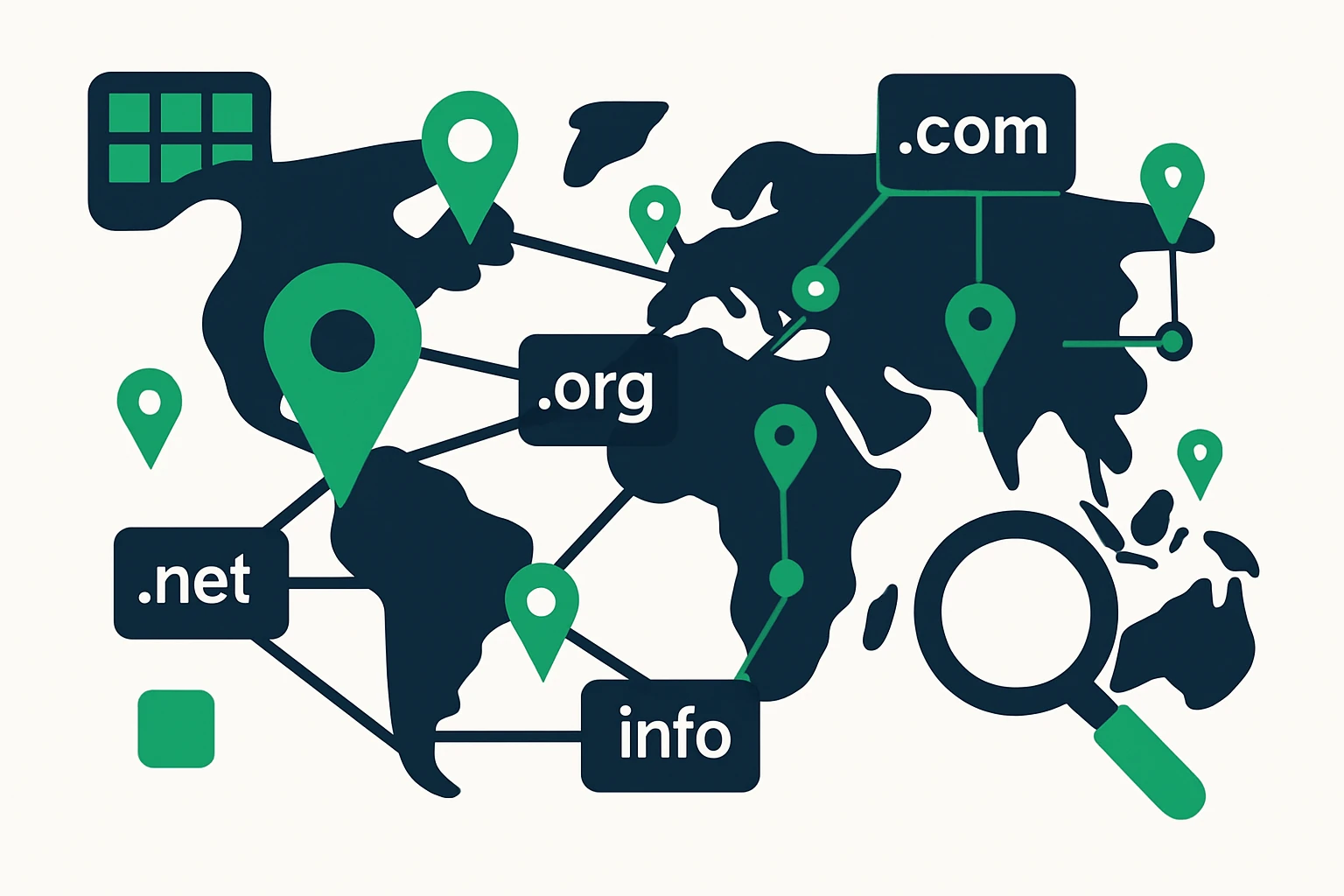
Introduction: why every brand needs a domain risk roadmap
Businesses increasingly rely on a coherent online identity that spans multiple domain extensions. The reality is that the most visible, trusted domains are not just the classics like .com or .org, a competitive footprint today often includes a mix of generic and country-code TLDs, as well as newer generic TLDs. For brand protection and phishing defense, the choice of TLDs and the visibility of lookalike domains can determine whether a customer trusts a brand or clicks into a fraud site. This article offers a practical framework to understand the domain landscape, assess risks across top-level domains, and integrate digital risk intelligence into a defensible governance model. The discussion is grounded in current market dynamics and threat trends, with actionable steps you can apply today. Source: Verisign DNIB Q2 2025.
The TLD landscape: what the market looks like in 2025
Public registries report continued growth in the global domain name market, driven by demand for online brands, regional commerce, and new gTLDs. In Q2 2025, DNIB data show 371.7 million domain name registrations across all TLDs, up 0.9% from the previous quarter, underscoring that the market remains dynamic and multi-faceted. The report also highlights the Top 10 largest TLDs by registrations, a reminder that a brand’s digital footprint extends far beyond a single ending. This context matters for risk management, because even if a brand dominates in .com, attackers frequently exploit under-utilized extensions to impersonate or siphon traffic. Source: Verisign DNIB Q2 2025.
Understanding gTLDs and ccTLDs
To map risk effectively, it helps to anchor the discussion in how TLDs are organized. The Internet Corporation for Assigned Names and Numbers (ICANN) defines generic top-level domains (gTLDs) as the broad class that includes well-known endings like .com, .net, .org, as well as newer gTLDs such as .pizza, .football, and other language-based endings. Country code TLDs (ccTLDs) cover individual nations or territories, such as .es, .de, or .uk. This taxonomy matters for risk planning because brand impersonation, phishing campaigns, and DNS-based attacks can leverage either category depending on attacker objectives and regional focus. Source: ICANN Acronyms and Terms.
Why attackers care about which TLD you use (and which you don’t own)
Digital risk intelligence must account for the fact that phishing and brand impersonation aren’t constrained to a single ending. Threat actors increasingly diversify their infrastructure across multiple TLDs to evade filters, broaden reach, and exploit regional trust signals. Industry observers highlight notable shifts: in 2025, credential-phishing campaigns began leveraging country-code TLDs such as .es at scale, alongside traditional drivers like .com and .ru, reinforcing the need for broad monitoring. The implications for brand protection are clear: many attacks hinge on lookalike or typosquatted domains registered under a variety of TLDs. Source: Cofense 2026 Annual Report.
How to search all domain extensions without being overwhelmed
For brand teams, the challenge is to discover and monitor all domain extensions that could plausibly carry a brand lookalike, then triage risk in a way that informs policy and response. A practical starting point is to enumerate typical brand terms (names, product lines, taglines, and common misspellings) and then expand that search across both gTLDs and ccTLDs. While it is tempting to focus on .com alone, credible threat data shows that attackers increasingly exploit non-dominant endings to host phishing pages or fraud content. The first step is to map the domain ecosystem you care about, using available registries and risk feeds. A broader approach minimizes “blind spots” where a brand could be misrepresented or abused. Source: Verisign DNIB Q2 2025.
A practical framework: Domain Risk Mapping (a structured, repeatable process)
Below is a concise framework you can apply quarterly to keep your brand safe across TLDs:
- Brand term inventory – compile core brand names, product lines, and common variants. Include localization and potential typographical errors that customers might type by mistake.
- TLD scope determination – decide which gTLDs and ccTLDs to monitor based on brand presence, regional operations, and threat signals. Prioritize those that historically correlate with impersonation in your sector.
- Domain discovery & monitoring – deploy continuous scanning across the defined set of TLDs to identify newly registered domains that resemble your brand and observe evolving patterns (e.g., typosquatting, homoglyphs, or typos with country-code endings).
- Response governance – establish a playbook for handling findings, including takedown requests, registration disputes, and customer communications. This governance should align with your incident response and legal teams.
These steps are designed to be repeatable and auditable, enabling security and brand teams to demonstrate due diligence and continuous improvement. For teams seeking a consolidated source of domain intelligence, one of the practical advantages of a platform approach is the ability to correlate registrations with threat signals in real time. The growth of the domain market, alongside increasing abuse of underutilized TLDs, reinforces the need for a structured, scalable approach to monitoring all extensions. Source: ICANN.
How digital risk intelligence platforms support brand protection (with a focus on domain data)
At the core, digital risk intelligence combines domain reputation signals, real-time threat feeds, and automated response workflows to prevent brand damage from domain abuse. A mature approach includes: continuous monitoring for lookalike domains across both popular and obscure TLDs, phishing detection that correlates domain patterns with credential-phishing campaigns, and rapid incident response coordination across security and legal teams. The RDAP &, WHOIS Database and the comprehensive List of domains by TLDs pages offered by the client provide practical access points for domain intelligence workflows, helping teams quickly verify ownership and detect new registrations that could impact brand trust. This multidimensional approach aligns with the broader need to understand how domain ecosystems evolve and where risk concentrates. For a broader look at TLDs, see the ICANN and Verisign sources cited above.
Expert insight
Industry practitioners increasingly emphasize that effective brand protection requires a holistic view of the domain landscape, not a single-endpoint focus. An expert perspective in threat intelligence notes that the strongest programs pair proactive domain discovery with contextual risk scoring and clear governance - so organizations can act before a customer is exposed to a lookalike site. This aligned, proactive posture is exactly what digital risk intelligence platforms are designed to deliver.
Limitations, trade-offs, and common mistakes
Even with a robust framework, there are important limitations to consider and pitfalls to avoid:
- False positives are common when broad monitoring sweeps up many low-risk domains, tuning risk thresholds is essential.
- Regulatory and jurisdictional nuances can complicate takedown or dispute processes across different TLDs and regions.
- New gTLDs and ccTLDs continuously emerge, staying current requires regular sources of truth and a scalable monitoring strategy.
- Privacy protections (WHOIS privacy) can obscure ownership, complicating takedown actions and necessitating alternate verification methods.
These trade-offs underscore why a layered approach - combining domain intelligence, phishing detection, brand monitoring tools, and incident response - tends to be most effective. The industry trend toward diversified TLD abuse, including non-traditional endings, reinforces the need for ongoing education and governance, not a one-off sweep. For context on how attackers leverage diverse TLDs, see the Cofense 2026 report indicating shifts in phishing infrastructure and domain usage. Source: Cofense 2026 Annual Report.
Structured block: Domain Risk Mapping Framework (recap)
The framework below consolidates the steps into a repeatable workflow you can embed into quarterly security reviews and brand protection rituals:
- Step 1 – Brand term inventory: list names, products, and variants, add likely misspellings and localization.
- Step 2 – TLD scope determination: select gTLDs and ccTLDs based on market presence and threat signals.
- Step 3 – Domain discovery & monitoring: implement continuous scanning across the chosen TLD set and triage findings by risk score and exposure.
- Step 4 – Response governance: align with legal, PR, and security teams, define takedown, dispute, and customer notification workflows.
Putting it into practice: how to leverage available resources
For organizations seeking to operationalize this approach, it helps to leverage a combination of public registries, threat intelligence feeds, and domain discovery tooling. The client’s portfolio offers practical access points for domain intelligence workflows: a comprehensive List of domains by TLDs to understand the broader ecosystem, as well as a RDAP &, WHOIS Database for ownership verification and rapid domain validation. These resources can be integrated alongside standard threat feeds to produce a richer, more actionable risk signal. In practice, teams will want to tie these signals to incident response playbooks and governance dashboards to ensure accountability and timely remediation.
Conclusion: a proactive, data-informed path to brand protection across TLDs
The domain landscape in 2025 demonstrates that attackers are flexible about endings, and brand protection programs must be equally adaptable. A disciplined approach - rooted in TLD awareness, broad search across domain extensions, structured risk mapping, and rapid response - offers the best chance to defend customer trust and preserve brand equity. By tying domain intelligence to phishing detection and incident response, organizations can reduce exposure to lookalike domains and credential theft, while staying ahead of evolving abuse patterns across the global namespace.