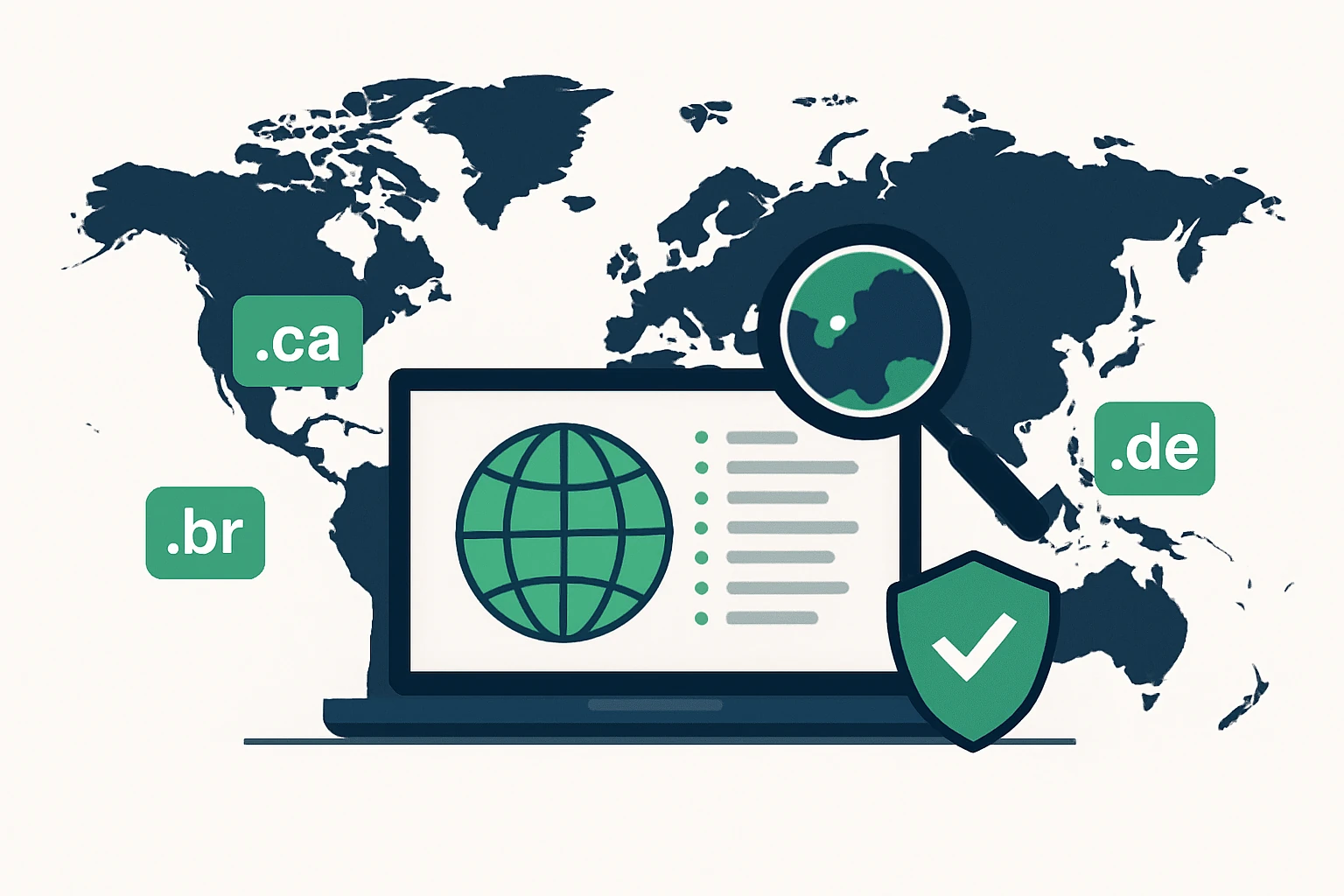
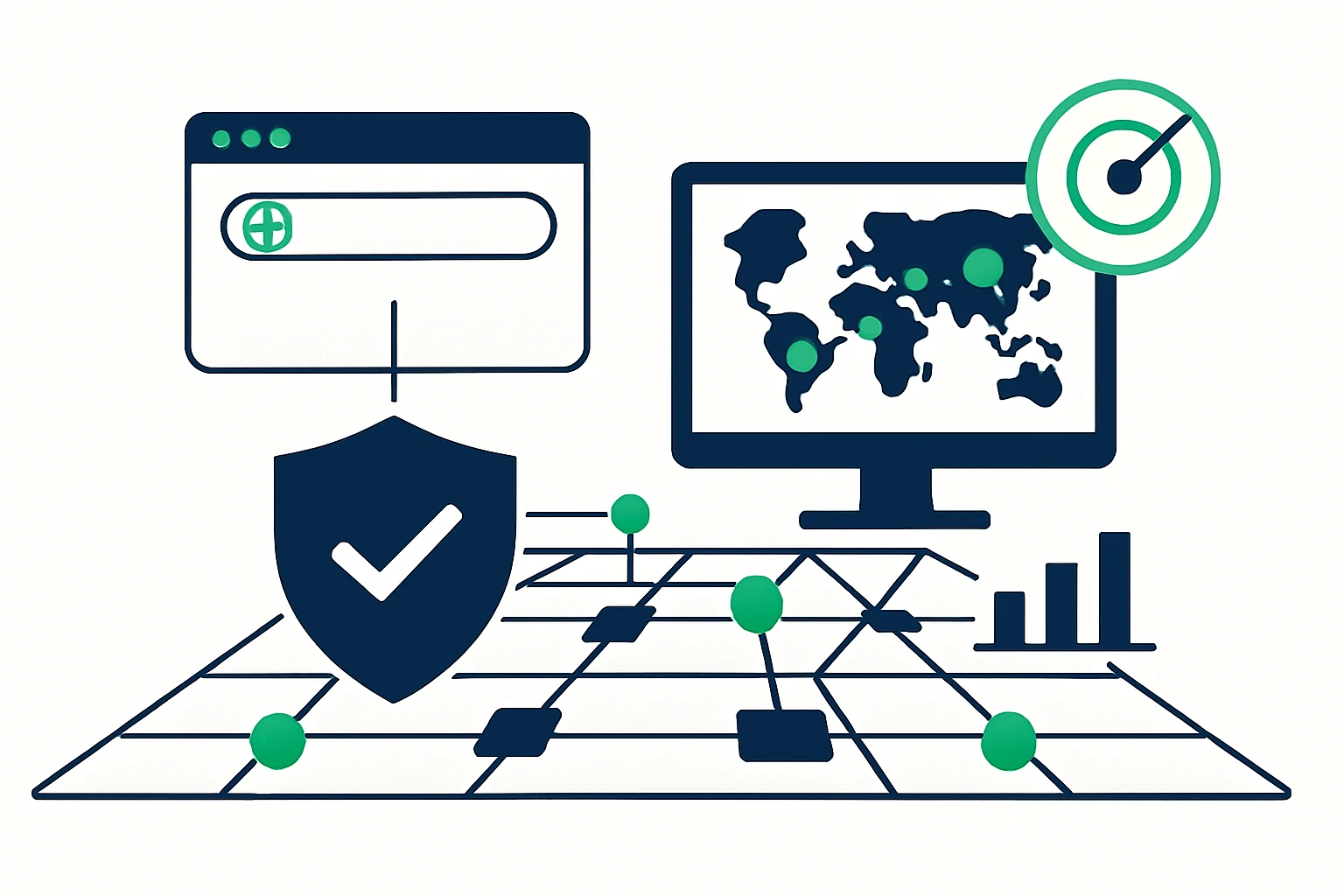
Problem at scale: brands increasingly contend with a sprawling digital footprint that spans not just their primary domain, but a landscape of lookalike, typosquatted, and brand-impersonating domains across multiple top‑level domains (TLDs). The result is a volatile mix of customer confusion, hijacked search real estate, and a rising tide of phishing and fraud attempts tied to brand abuse. In this context, many organizations discover that a static list of domains is insufficient. What matters is a live domain footprint: a real-time inventory of all domains that could pose risk to your brand, across geographies and languages. This article outlines how to move from a simple list of domains to a live domain monitoring program that anchors digital risk intelligence and brand protection efforts. This shift is timely: industry observers note a growing volume of domain disputes and brand-impersonation attempts in the last few years, underscoring the need for proactive domain monitoring.
Two important shifts shape today’s domain data landscape. First, ICANN formally sunset WHOIS data for generic top‑level domains (gTLDs) and replaced it with the Registration Data Access Protocol (RDAP) in January 2025, making RDAP the definitive source for domain registration data in many cases. Second, threats like typosquatting, homograph attacks, and combosquatting require more than a registry watch - they demand real-time domain intelligence that can inform incident response and brand protection workflows. ICANN confirms the RDAP transition, while industry observers highlight the corresponding rise in brand-protection activity as a safeguard against abuse.
For organizations building digital risk programs, the implication is clear: to defend a brand in the wild web, you need a live, cross‑TLD, real‑time view of the domain landscape - one that integrates domain data with phishing detection, impersonation signals, and incident response playbooks. This article offers a practical path to a live-domain footprint and explains how a domain‑intelligence approach can power phishing protection services and other protections without becoming a burden on security teams.
Understanding the Live Domain Footprint
The concept of a live domain footprint goes beyond a single registry watchlist. It encompasses:
- Active domains that resolve to IPs and hostnames where customers may transact or search for information.
- Lookalike and typosquatted variants that could lure users into phishing sites or counterfeit shopping experiences.
- Homograph risks - domains that visually resemble a brand through character substitutions or Unicode tricks.
- Combosquatted domains that append brand terms to the core name (for example, brandname-login or brandname-discounts).
- Domains registered in geography or language markets where your brand operates, even if you do not actively market there.
Effective live-domain footprinting requires continuous ingestion of registration and hosting signals, plus automated risk scoring. In practice, this means combining RDAP/W registrations data with live DNS resolution checks, SSL certificate observations, and domain‑level threat signals to prioritize investigation and response. Industry players in brand protection and domain security emphasize continuous monitoring and automated workflows as essential to scale. Infoblox highlights how lookalike domain monitoring and domain mitigation underpin global brand protection, including detection of impersonation and phishing across the protection layers.
In parallel, experts note that typosquatting and other domain abuse trends are rising. A recent analysis highlights the escalating volume of brand-impersonation attempts and disputes as brands push back with proactive monitoring and takedown workflows. Forbes underscores typosquatting as a persistent threat that requires vigilant domain monitoring and rapid response.
From List to Framework: A Practical Live Domain Footprint
Turning a scattered list of brand domains into a robust live-domain footprint involves five coordinated steps. The framework below is designed to be editorially native to security teams and brand custodians, while remaining implementable with commercial tools and data feeds from domain providers.
Live Domain Footprint Framework
- Define the footprint: assemble a baseline inventory of core brand domains and known variants across all relevant TLDs, including country-code TLDs (ccTLDs) and any brand-specific TLDs. Extend coverage to potential variants created by combinations or local language equivalents. This foundation is the input for ongoing monitoring.
- Map liveness and reach: verify which domains resolve to hosting infrastructure, which deliver legitimate content, and which are dormant. Combine DNS lookups with RDAP data to understand ownership and administrative contacts, noting any redactions or privacy protections that complicate takedown decisions. ICANN’s RDAP transition informs how you source up-to-date registration data going forward.
- Signal risk in real time: automate the collection of risk indicators such as lookalike patterns, typosquats, homographs, and keyworded variations. Score domains on three axes: brand affinity, technical risk (phishing/malware signals), and take‑down feasibility. This triage speeds up security operations when handling large domain landscapes.
- Integrate with incident workflows: route high-risk domains into a threat‑intelligence dashboard, ticketing system, or SIEM/SOAR integration so that security analysts and brand teams can collaborate. A unified workflow reduces alert fatigue and accelerates takedown or remediation actions.
- Act with governance and evidence: document takedown requests, domain registrations, and dispute outcomes to build an auditable trail for compliance and brand governance. A robust framework supports both protection and risk management across business units.
Organizations often begin with a core set of domains and then scale to cover all domains and live domains across markets. A practical starting point is to map domains by TLDs and to track which ones are live (resolve and serve content) versus parked or inactive. A structured approach to collection and enrichment is essential for meaningful risk scoring. For teams seeking a consolidated source, dedicated domain intelligence feeds and RDAP access can accelerate this mapping process.
Operationalizing Live-Domain Monitoring: Tools, Signals, and Playbooks
To translate the footprint framework into action, organizations often combine three layers: data collection, risk scoring, and response orchestration. The data layer brings together registration data, domain DNS data, SSL observations, and related risk signals. The scoring layer ranks domains by the likelihood of harm, and the response layer connects the ranked list to takedowns, registrar communications, or brand-protection workflows.
At the data level, RDAP and WHOIS data evolution matters. ICANN’s announcement confirms that RDAP is the definitive data source for gTLDs as of 2025, and many registries and registrars have begun reporting data through RDAP endpoints. This shift affects how teams query and harmonize data across registries and can improve data quality and API access for automation. ICANN outlines the transition, while practitioners note that ccTLD coverage may vary, requiring a multi-source strategy for complete visibility.
On the risk signals side, the branding security landscape has grown beyond simple domain monitoring. A multi‑vendor approach often combines lookalike detection, phishing‑site discovery, and impersonation analytics to provide a durable shield for brands. DefendDomain describes a comprehensive process that includes rapid lookalike-domain detection, phishing domain discovery, and lifecycle management from detection through resolution. This end-to-end approach helps teams maintain phishing protection services and governance across the threat lifecycle.
Another practical angle is to ensure the footprint captures live domains that matter for customers and partners. Real-time dashboards, daily snapshots, and automated threat intel enrichment give brand teams timely insight into the evolving domain landscape. For teams exploring vendor options, Infoblox highlights the importance of global DNS intelligence and automated lookalike-domain protection as a core element of brand security.
For teams investigating a more technical and data-focused path, 1Lookup and Constella Intelligence offer domain monitoring APIs and dashboards that integrate into security workflows, enabling rapid risk assessment and response. These examples reflect the broader industry consensus: a live-domain footprint is a practical, scalable, and essential component of modern brand-protection programs.
Editorial note: the landscape continues to evolve as RDAP adoption expands and more registries publish robust data feeds. A well-constructed live-domain footprint remains a practical, defensible approach for maintaining brand integrity in a crowded digital ecosystem.
Limitations, Trade-offs, and Common Mistakes
Even a well-designed live-domain footprint has constraints. Here are the most common trade-offs and missteps to avoid:
- RDAP coverage gaps: not all ccTLD registries provide full RDAP data, which means some domains in non‑gTLD spaces may require alternative data sources or manual verification. A robust program acknowledges this gap and layers sources accordingly. ICANN’s transition plan and industry analyses explain these nuances and the ongoing evolution of registration data access.
- Redactions and privacy controls: modern RDAP data often redacts registrant information, complicating takedown and enforcement workflows. Organizations should pair RDAP with other signals (hosting data, SSL observations, risk scoring) to maintain actionability.
- False positives and alert fatigue: typosquatting and homograph detection can generate false alarms. A disciplined risk-scoring framework, combined with workflow automation, helps keep the signal-to-noise ratio acceptable.
- Resource and cost trade-offs: a truly global live-domain footprint across dozens of TLDs demands investment in data feeds, automation, and dedicated personnel. Start with a core footprint and scale to broader markets as risk tolerance warrants.
- Reliance on vendors: while third-party data is valuable, organizations should maintain governance over how data is collected, enriched, and acted upon. Build repeatable, auditable processes rather than bespoke, one-off scripts.
Common mistakes include treating a static “watch list” as a comprehensive solution, failing to update the footprint after new TLDs or market entries, and neglecting the takedown workflow when a high-risk domain is detected. A successful program balances comprehensive visibility with disciplined response, using automated enrichment and auditable procedures to ensure accountability.
Conclusion: Making Live Domains Work for Brand Protection
In an era where brand abuse and phishing threats evolve rapidly across a global digital landscape, a live-domain footprint offers a practical, scalable path to digital risk intelligence and brand protection that goes beyond a static list. By combining robust data sources (including RDAP where available), risk scoring, and integrated incident workflows, organizations can move from merely listing domains to actively monitoring, triaging, and responding to threats as they appear. The result is a more resilient brand presence, improved user trust, and faster containment of domain-based attacks.
For teams seeking a practical path forward, consider starting with a core footprint across your most critical markets and gradually expanding coverage to all relevant TLDs. Leverage RDAP-enabled data feeds to improve accuracy, and pair this with a structured takedown workflow to close the loop from detection to remediation. If you’re evaluating providers or data sources, you may want to explore WebAtla’s domain data offerings, including the RDAP & WHOIS database and the directory of domains by TLDs and by country, to help assemble and maintain a live-domain footprint. WebAtla provides access to structured data and tooling that can support a live-domain strategy across geographies. For a targeted look at domains by TLDs, see List of domains by TLDs, and for access to registration data, explore RDAP & WHOIS Database.