Introduction: A new data reality for brand protection
Digital risk intelligence is no longer a luxury for security teams, it is a mandatory capability for protecting brands in a crowded online ecosystem. Threat actors exploit look-alike domains, impersonation, and fast-moving phishing campaigns to siphon customers, harvest credentials, and erode trust. The data landscape itself has evolved: the longstanding whois directory is being replaced by Registration Data Access Protocol (RDAP) to deliver registration data in a structured, privacy-conscious way. As organizations adjust, security and brand teams must build workflows that blend RDAP/WHOIS data with domain lists and domain intelligence to detect risks before they become incidents.
For practitioners, this shift means rethinking how you perform a whois database lookup into a broader data-driven defense. It also means leveraging curated domain lists - such as downloadable cohorts of domains by TLD - to enrich threat signals and accelerate response. The transition is not just technical, it is strategic: you must align data access, privacy rules, and threat intel practices to protect your brand without compromising user privacy. ICANN has officially sunsetted the traditional WHOIS in favor of RDAP as of January 28, 2025, a move designed to modernize data access while respecting privacy requirements. ICANN
Data landscape: RDAP vs WHOIS and what it means for risk intel
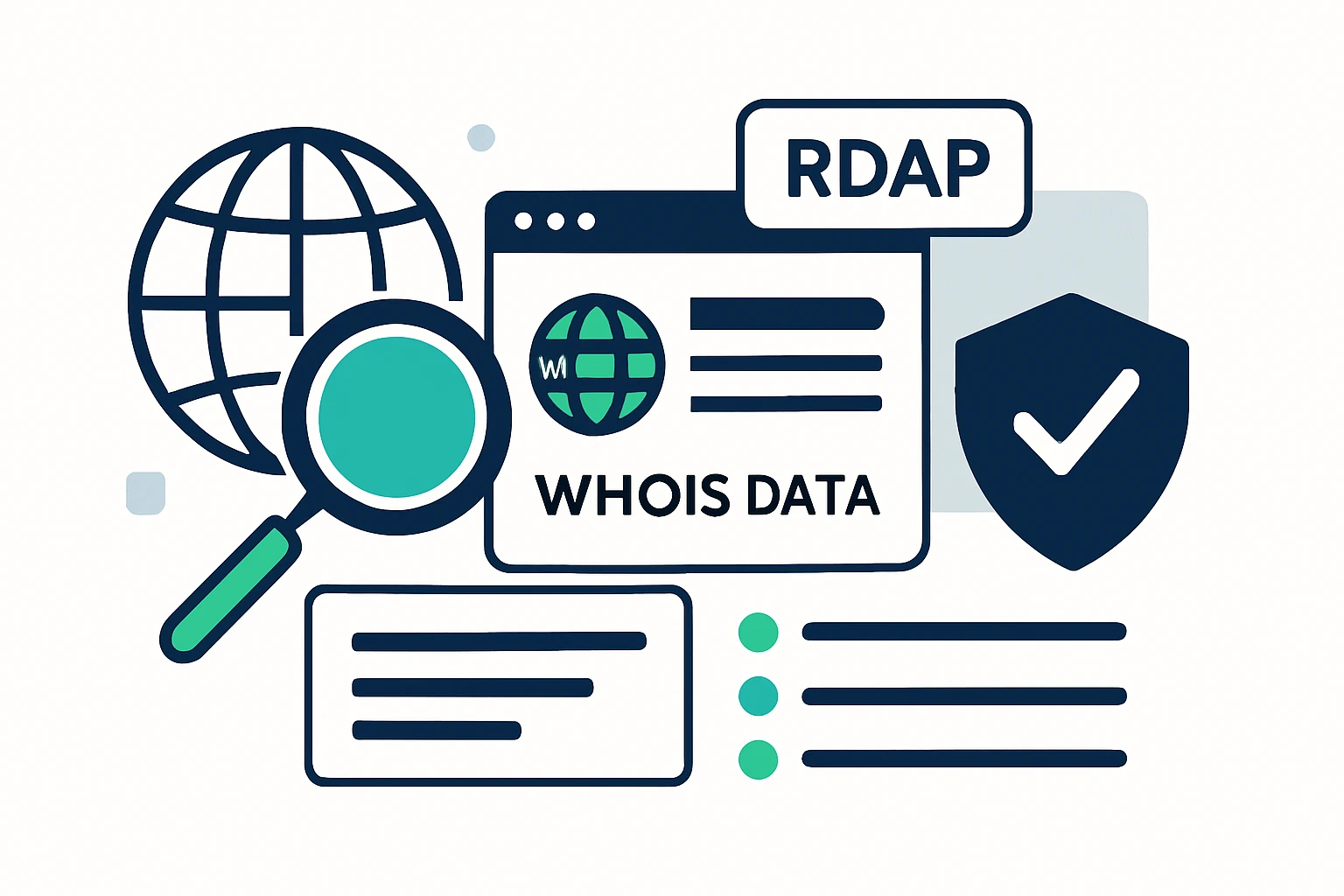
The Registration Data Access Protocol (RDAP) is the modern successor to the legacy WHOIS protocol. RDAP uses RESTful HTTP/JSON responses, offers standardized query formats, and supports access controls and privacy features that align with contemporary data protection regimes. This structured data model makes it easier to automate domain intelligence workflows, normalize registrant fields, and integrate with other threat signals. ICANN and industry participants have documented the shift from WHOIS to RDAP, including the phased ramp-up and eventual sunsetting of WHOIS for generic top-level domains. ICANN, CAB Forum: Ballot 224
Privacy considerations are central to this evolution. The European Union's GDPR and other data protection laws influence what data is publicly accessible and how it is redacted or announced in RDAP responses. ICANN has published guidance on data protection and privacy in this context, emphasizing that registrant information must be handled with privacy by design while supporting legitimate use by regulators, brands, and security teams. ICANN – Data Protection & Privacy, GDPR guidance and context
Why domain data matters for brand protection
Brand protection and phishing prevention hinge on timely, accurate visibility into the domain landscape. Domain impersonation and look-alike domains remain a persistent threat, with phishing operations often leveraging newly registered domains that mimic trusted brands. Industry research underscores the scale and impact of these tactics. For example, domain impersonation remains a leading vector in brand-targeted phishing campaigns, with many attackers rapidly registering look-alike domains to deceive victims. PhishLabs: Domain Impersonation Report
Beyond pure domain counts, threat intelligence benefits from integrating domain data with brand signals and incident response workflows. The ENISA Threat Landscape 2024 also highlights the ongoing risk of brand phishing and domain abuse as a core attack surface, emphasizing proactive monitoring and fast takedown processes as essential mitigations. ENISA Threat Landscape 2024
A practical workflow: turning RDAP, Whois data, and domain lists into action
To operationalize digital risk intelligence for brand protection, teams can follow a repeatable workflow that couples data access with automation and human judgment. The framework below provides a concrete path from data collection to incident response, with a focus on actionable signals rather than noise.
The 4D Framework for Digital Risk Intelligence
- Discover data sources: Start with RDAP queries and whois lookups to obtain registration data. Where permissible, supplement with public domain lists by TLD, which allow you to monitor cohorts such as download list of .com domains and download list of .de domains for baseline risk assessment. For access to a consolidated, up-to-date data source, see the RDAP & WHOIS Database offering from WebAtla. RDAP & WHOIS Database and List of domains in .com TLD, List of domains in .de TLD.
- Decide risk signals: Build a risk model that flags domains with brand name similarity, registration velocity, or anomalous registrant data. Treat domain data signals (availability, age, registrant changes) as one part of a broader risk picture rather than standalone indicators.
- Defend with automation: Set up alerts and automated workflows for triage, takedown recommendations, and incident response. Integrate RDAP/WHOIS signals with downstream security tools to accelerate containment.
- Deliver insights: Create dashboards and reports that translate technical signals into business actions for brand protection, legal, and security teams. This ensures that risk intelligence informs policy decisions and operational playbooks.
Where WebAtla fits into this workflow
For security and brand teams that need reliable access to current domain data, WebAtla provides a cohesive data layer that complements your internal risk models. The RDAP & WHOIS Database consolidates registration data, while the curated domain lists by TLD enable scalable monitoring and trend analysis. You can explore the following example data sources directly from WebAtla: List of domains in .com TLD and List of domains in .de TLD. Using these resources in tandem with RDAP/WHOIS data supports more accurate risk scoring and faster decision-making for brand protection initiatives.
Limitations and common mistakes
- Privacy restrictions and redaction: GDPR and other privacy laws shape what data is publicly visible. Even with RDAP, sensitive fields may be redacted or require identity verification for access. This can complicate automated enrichment. See ICANN guidance on data protection and privacy. ICANN – Data Protection & Privacy
- Data consistency between RDAP and WHOIS: While RDAP standardizes responses, gaps or inconsistencies can arise across registries and TLDs. Consider implementing cross-source reconciliation in your workflow. (CAB Forum discussions and RFC lineage provide context for RDAP adoption.)
- Over-reliance on data without context: Domain data alone does not determine risk. Combine signals with brand monitoring, incident history, and user-facing risk indicators to avoid false positives that waste resources. For context on brand phishing trends, see PhishLabs research and ENISA threat landscape.
Expert insight
Expert perspective: Industry policy and security advocates emphasize that the RDAP transition aligns with privacy-by-design principles and enables more reliable threat intelligence workflows. As ICANN has noted, the move to RDAP supports standardized data formats and enhanced privacy controls, which is essential for scalable risk monitoring and incident response. ICANN
Putting it all together: a pragmatic takeaway
The shift from WHOIS to RDAP is not merely a technical upgrade, it is the backbone of modern digital risk intelligence. By combining RDAP/WHOIS data with targeted domain lists and structured threat signals, brand protection teams can detect impersonation attempts earlier, prioritize takedown actions more effectively, and shorten the time from risk discovery to mitigation. The data-integrity and privacy benefits of RDAP also help ensure that your threat intelligence program remains compliant with evolving regulatory expectations, which is critical for global brands operating across multiple jurisdictions.
External sources and further reading
For readers seeking deeper context on the evolution of domain data access, RDAP adoption, and the regulatory landscape, the following sources offer authoritative perspectives: ICANN: Launching RDAP and sunsetting WHOIS, ENISA Threat Landscape 2024, PhishLabs: Domain Impersonation Report
Note: This article references data sources and best practices relevant to digital risk intelligence and brand protection. It also showcases WebAtla’s data capabilities as practical supplements for practitioners seeking reliable domain data and risk signals, including access to the RDAP & WHOIS Database and domain lists such as .com and .de domains.