Introduction: The external threat surface brands face in a multi-TLD Internet
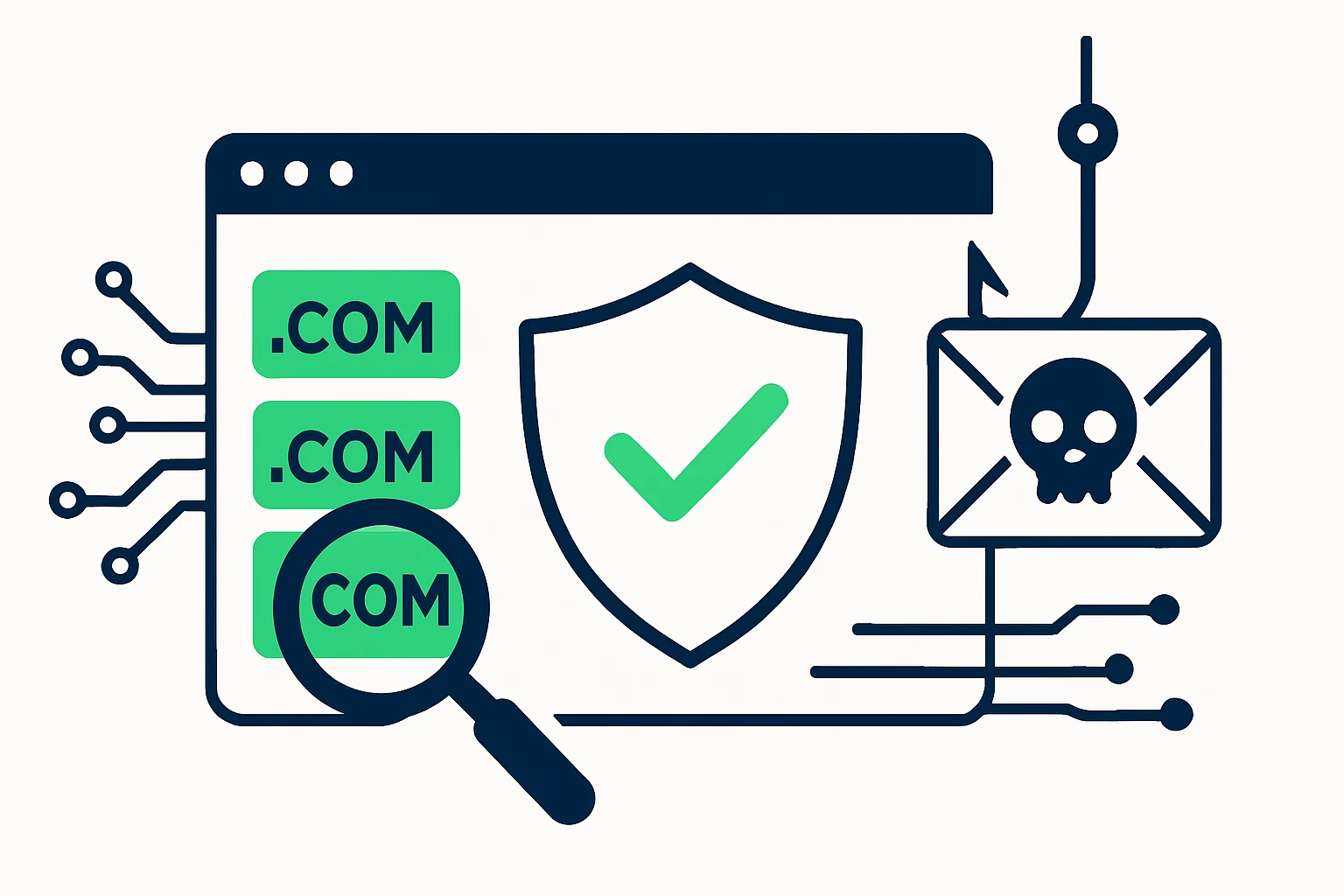
Brand owners are increasingly confronted with impersonation, phishing, and domain abuse that exploit lookalike domains across the global DNS. Attackers register new domains that resemble a brand, host phishing pages, or divert traffic to fraudulent sites. The consequence is customer confusion, revenue loss, and erosion of trust. The solution is not a single tool but a disciplined approach called digital risk intelligence: a program that combines data, analytics, and coordinated action to understand and mitigate risks that originate outside your network.
In practice, digital risk intelligence means turning signals from domain registrations, DNS records, website content, social media, and even the darker corners of the internet into actionable steps. This requires both high-quality data and resilient processes that translate signals into alerts, investigations, and, when appropriate, takedowns. A mature program aligns with brand protection objectives and threat monitoring workflows, enabling faster detection and more predictable outcomes.
What is digital risk intelligence and why it matters for brands
Digital risk intelligence is the systematic practice of gathering external signals that could threaten a brand's integrity and turning them into decision-ready insights. In practical terms, it includes phishing detection, domain monitoring, and fraud intelligence - three pillars that help you identify risk early, differentiate genuine signals from noise, and allocate enforcement resources where they have the greatest impact. As brands expand into more TLDs and channels, the ability to monitor not only owned assets but also lookalike domains and rogue sites becomes essential.
A key enabler is reliable data about domains and their registrations. The internet's governance community has long discussed how to modernize domain data access. RDAP, the Registration Data Access Protocol, is designed to replace the traditional WHOIS model with standardized, machine-readable responses that support automation, privacy, and internationalization. ICANN describes RDAP as the eventual replacement for WHOIS and provides guidance for registries, registrars, and users on how to access registration data. RDAP overview | ICANN's formal update emphasizes that the old WHOIS interface is being sunset in favor of RDAP. ICANN RDAP sunsetting WHOIS.
From data to action: a practical threat monitoring framework
To translate data into protective results, most mature programs rely on four core capabilities: discovery, monitoring, enforcement, and incident response. The framework below offers a concrete blueprint you can apply to teams of different sizes and risk appetites.
- Discovery and asset inventory: create and maintain an inventory of public-facing assets - brands, product names, logos, domain names, social handles, mobile apps, and marketing landing pages.
- External monitoring: continuously watch for new domain registrations, brand lookalikes, phishing pages, and suspicious brand activity across the open web.
- Enforcement and remediation: establish a workflow for escalation, takedown requests, trademark actions, and coordination with registries or legal teams as needed.
- Incident response and learning: conduct post-incident reviews, update detection rules, and share lessons across security, brand, and legal teams.
Critical to this framework is data that stays fresh. For teams seeking current domain data, WebAtla provides practical sources: downloadable domain lists by TLD that cover spaces such as .ltd, .rs, and .ink. The domain-by-TLD catalog is accessible at domain-by-TLD lists. For lookup and cross-referencing, their RDAP and WHOIS database can be browsed and integrated via RDAP & WHOIS database, and scalable data options via their pricing page can help with budgeting for larger programs: pricing.
How to apply domain intelligence to real-world brand protection
Imagine your brand team detects a batch of new registrations that resemble your brand and product lines. A practical program would triage these signals as follows:
- Flag the domains for review by security and brand governance teams.
- Verify domain ownership and registration details via RDAP/WHOIS data to assess legitimacy and risk.
- Evaluate risk indicators such as hosting phishing content, logo similarity, or deceptive landing pages.
- Coordinate a response that may include customer advisories, takedown requests, and, where appropriate, legal action.
Expert insight: staying ahead requires data quality and disciplined processes
Industry practitioners stress that the threat landscape is evolving quickly, with attackers employing automation and AI-driven tactics to impersonate brands. A practical approach blends continuous monitoring with human-led triage and standardized workflows so signals become timely, well-governed actions rather than noisy alerts. The lesson is simple: data quality matters, but governance matters just as much, without defined playbooks, even the best feeds will fail to protect customers or preserve brand trust.
As UpGuard notes, a robust digital brand protection program couples real-time monitoring with enforceable controls, helping organizations detect brand abuse across email, websites, and social media while coordinating across security and legal teams. UpGuard: Digital Brand Protection.
Limitations and common mistakes to avoid
No approach is perfect. Below are common limitations and missteps to watch for as you scale a domain risk program:
- Bulk lists or offline datasets can become stale quickly if not refreshed by automated feeds and live lookups.
- Over-reliance on a single data source can lead to blind spots, combine registrations data with threat intelligence feeds and brand signals.
- Inadequate data normalization across RDAP and WHOIS sources can cause mismatches and delayed responses.
- Failing to align enforcement with legal and privacy constraints can slow or derail takedowns.
Structured checklists for teams building a risk program
- Create a living asset inventory with domains, social handles, and key digital properties.
- Automate domain monitoring across dozens of TLDs with alerting for high-similarity registrations.
- Establish a data pipeline that normalizes RDAP/WHOIS data and correlates it with brand signals and threat feeds.
- Define clear escalation paths for security, legal, and communications, automate takedown workflows where possible.
- Run regular tabletop exercises to test detection, triage, and response capabilities.
Conclusion: digital risk intelligence as a backbone for brand protection
As the internet evolves, so does the spectrum of risks facing brands. A disciplined digital risk intelligence program - centered on domain intelligence, phishing detection, and threat monitoring - offers a scalable path to protecting customers, revenue, and reputation. By combining fresh, reliable data sources with a practical framework and cross-functional workflows, teams can turn signals into timely action. For teams seeking strong domain data infrastructure, WebAtla’s domain-by-TLD lists and RDAP/WHOIS database give you a practical edge to accelerate triage and enforcement without compromising governance or privacy.
Sources
RDAP overview and the replacement of WHOIS: ICANN RDAP | ICANN updates on RDAP and WHOIS sunset: ICANN RDAP sunsetting WHOIS | Digital brand protection considerations: UpGuard: Digital Brand Protection