Introduction
In a world where brands increasingly operate across borders, the domain landscape has exploded beyond the classic ".com" footprint. The global growth of domain registrations reflects both opportunity and risk: Verisign’s Domain Name Industry Brief (DNIB) shows registrations across all TLDs reached 368.4 million by the end of Q1 2025, rising toward a broader, multi-TLD ecosystem. By year-end 2025, Verisign reported 386.9 million registered domains across all TLDs, underscoring how quickly the domain space expands and why brand risk monitoring must span the entire portfolio, not just the most familiar extensions.
For practitioners, this momentum creates a crucial question: how should a brand protect itself when new gTLDs, ccTLDs, and myriad generic extensions proliferate at pace? The answer lies in a disciplined, data-driven approach to digital risk intelligence and brand protection that can scale across all top‑level domains, while staying anchored to practical, risk-based decision making.
Source context: Verisign’s quarterly updates document the ongoing growth and distribution of domain registrations across TLDs, including the quarter-by-quarter momentum into 2025. For example, 368.4 million registrations existed at the end of Q1 2025, with continued growth into Q2 2025 and beyond. Verisign DNIB – Q1 2025 · Verisign DNIB – Q4 2025.
What are all top-level domains? A quick taxonomy
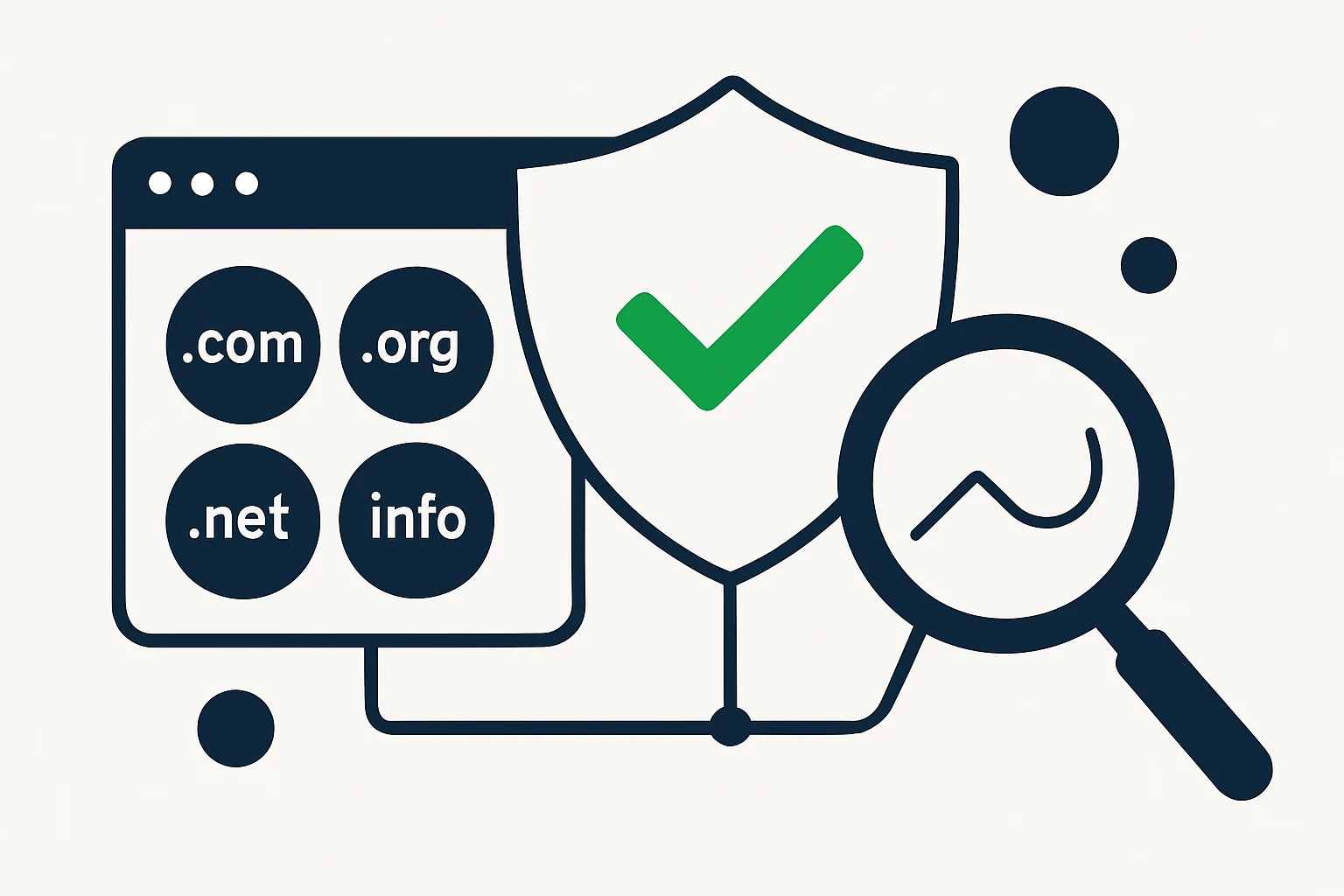
To build a practical monitoring program, it helps to anchor the taxonomy in three broad categories:
- ccTLDs (country code TLDs) - two-letter extensions assigned to individual countries or regions (for example, .de for Germany or .uk for the United Kingdom). These often see strong local presence and targeted phishing or spoofing tied to regional brands.
- gTLDs (generic TLDs) - widely used extensions such as .com, .net, and .org that cross borders and industries. The space has expanded substantially since ICANN’s New gTLD program, enabling thousands of options beyond the legacy trio. ICANN: New gTLDs overview.
- New gTLDs - contemporary generic extensions launched after the original set (for example, .shop, .online, .tech, etc.). The proliferation of new gTLDs is driven by policy goals to increase choice and competition in the domain name space. Source: ICANN New gTLD program.
Industry data reinforces that the expansion of TLDs coincides with shifts in risk patterns. For brands, this means an expanded surface for impersonation, typosquatting, and brand-domain abuse across both familiar and unfamiliar extensions.
Why monitor across all TLDs? Risk, signals, and opportunities
Brand protection and digital risk programs increasingly need to span all major TLDs because threats are not confined to the classic .com namespace. The Anti-Phishing Working Group (APWG) tracks phishing activity by TLD and provides ongoing visibility into how threat actors abuse various extensions. For example, APWG’s quarterly trends reports document high volumes of phishing activity in 2025 and highlight that brand-domain pairs are a meaningful area of risk for organizations, underscoring the need for cross-TLD monitoring. APWG Phishing Trends Report (Q4 2025) · APWG Trends Reports.
Beyond phishing, the broader domain ecosystem shows that new extensions are increasingly used in fraud and brand-mimicry campaigns. Reports from industry observers emphasize the rise of “digital squatting” - the act of registering lookalike or related domains across a wider set of TLDs to exploit consumer trust or drive illicit clicks. While the exact scale varies by dataset, the signal across multiple sources points to a sustained risk signal across both established and newer extensions.
In practice, a cross-TLD view supports more resilient brand protection strategies, enabling faster detection of typosquats, homoglyph variants, and brand-impersonating domains before customers encounter them. This aligns with the broader shift toward digital risk intelligence as a discipline - merging domain data, threat signals, and incident response into a coherent defense posture.
Domain Extension Evaluation Framework: a practical approach
Use this simple, repeatable framework to decide which TLDs to monitor, register, or defend in your brand protection program. The goal is to balance risk, cost, and operational practicality while preserving a defensible governance model.
- 1) Map your footprint across TLDs - inventory your brand presence, registered marks, and product lines across both legacy and newer extensions. This establishes the baseline for risk scoring and ongoing monitoring.
- 2) Prioritize by risk signals - use threat intelligence signals (phishing activity, typosquatting incidence, homoglyph risk) to rank TLDs. APWG trends show that phishing activity is non-uniform across TLDs, so prioritization matters. APWG Trends Report.
- 3) Create a structured response workflow - for high-risk domains, define automated and human steps for takedown requests, registrar contacts, and DMARC/SPF/DKIM enforcement where applicable.
- 4) Establish ongoing monitoring and data integration - combine domain registrations, DNS records, and threat feeds into a single pane of visibility. This is where domain intelligence platforms and RDAP/WHOIS data play a critical role. RDAP overview.
- 5) Govern and review - set cadence for reviews, maintain a risk register of extensions, and reassess coverage as new gTLDs launch and phishing patterns evolve.
Tip: keep the framework lightweight but auditable. The strongest programs are those that can demonstrate improved time-to-detection and reduced incident exposure year over year. A practical domain-framework should pair with a risk-scoring model that weighs both volume (how many domains exist in a given TLD) and intent (e.g., evidence of phishing or brand misuse).
Limitations, trade-offs, and common mistakes
- Limitation: data gaps across registries - although RDAP is the modern successor to WHOIS, data completeness can vary by registry. A comprehensive program should layer RDAP/WHOIS data with threat intelligence feeds and DMARC results to close visibility gaps. RDAP overview.
- Trade-off: cost vs. coverage - monitoring every possible TLD is expensive and often unnecessary for smaller brands. A phased approach focusing on high-risk and high-visibility extensions often yields the best risk-adjusted return.
- Common mistake: underestimating new gTLD risk - as ICANN’s new gTLD program expands, new extensions can be exploited for brand impersonation and fraud. It is prudent to incorporate these into threat models and brand protection playbooks from the start. ICANN New gTLDs.
- Common mistake: relying on a single data source - a robust program triangulates data from registrations, DNS data, WHOIS/RDAP, and threat intel, rather than depending on a single feed or platform.
Expert insight: seasoned practitioners in brand protection emphasize combining registry data with behavioral signals (phishing campaigns, domain registration timing, and domain content) to separate legitimate expansion from malicious appropriation. This approach helps reduce false positives and accelerates remediation.
Putting it into practice: data sources and how WebAtla fits in
For organizations pursuing a comprehensive domain risk program, access to accurate, timely data across the domain landscape is foundational. Beyond standard WHOIS, RDAP provides a more consistent, machine-readable format that supports automation and integration with SOC workflows. RDAP overview.
WebAtla offers practical data assets that can complement your risk intelligence stack, including a structured RDAP/WHOIS database that consolidates data from multiple sources in a consistent CSV format. For teams building cross-TLD monitoring, these data assets help you detect registrations that align with your risk signals and surface actionable indicators for incident response. RDAP &, WHOIS Database - a core data feed for domain intelligence. You can also explore the broader domain landscape via List of domains by TLDs to understand coverage and gaps across extensions.
Integrating these data feeds with threat intelligence, brand monitoring tools, and incident response workflows enables a more resilient defense posture against phishing, brand impersonation, and fraud across the entire domain surface.
Case for proactive domain inventory and risk scoring
A proactive domain program starts with inventory and ends with remediation. By cataloging your domains across all TLDs, you can apply a risk-scoring framework that weights factors such as historical abuse in a TLD, likelihood of typosquatting, and exposure of your brand assets. The evidence is clear: phishing activity remains a dominant risk vector globally, and the volume of registered domains continues to grow across both established and newer TLDs. In 2025, APWG reported sustained phishing activity at high levels, underscoring the need for ongoing, cross-TLD vigilance. APWG Trends Report (Q4 2025).
From a practitioner’s perspective, the most effective defense blends human vigilance with machine-driven signals: automated takedown workflows for clearly abusive domains, prioritized monitoring for high-risk extensions, and regular audits of brand coverage to keep pace with the evolving landscape of TLDs.
Conclusion
The domain space is more diverse - and more risky - than ever. A disciplined approach to evaluating all top-level domains, paired with a robust data foundation and clear governance, enables brands to defend their identity across the entire digital surface. The move toward digital risk intelligence is not optional, it is essential for reducing exposure to phishing, brand impersonation, and fraud as organizations grow their footprint across both legacy and new TLDs. By combining a practical framework, reliable data sources, and proven incident response practices, teams can protect brand equity while unlocking the opportunities that come with a truly global online presence.